Blogs
October 28, 2026
8
Mins Read
For FMCG and retail brands in Saudi Arabia, keeping products available where and when customers buy has never been more demanding. The market continues to grow, retail networks keep expanding across the Kingdom, and consumer demand rarely follows the same pattern for long. Latest studies show that a single season can account for close to a fifth of annual FMCG sales, and that is only one of many shifts brands manage throughout the year.
FMCG and retail demand patterns are never fixed. Different customer groups, branches, cities, and seasons create different demand patterns, constantly shifting inventory needs across the network. A replenishment strategy built around one pattern can quickly fall out of step with the next.
This is where logistics makes the difference. A replenishment strategy defines what should move, where, and when. The logistics behind it, from warehousing and transportation to data and visibility, is what makes that plan work across the network.
Most FMCG and retail brands plan their replenishment carefully. The challenge is that many plans are built around average demand, while real demand rarely behaves like an average. When demand shifts by season, region, or channel, these plans start to break down.
The result is a familiar imbalance: stockouts in one location and overstock in another, sometimes of the same product, at the same time. Both sides carry a real cost:
▪️Lost sales when products are out of stock.
▪️Shoppers switching to rival brands.
▪️Expiry and write-offs on slow-moving stock.
▪️Working capital tied up in the wrong locations.
▪️Extra transfers to rebalance inventory.

When a product is out of stock, the cost goes beyond a single lost sale. Latest studies show that close to half of consumers will switch to a different brand when their preferred product is unavailable, and some may never switch back. For brands competing for shelf space and loyalty, every gap in availability is an opportunity for a competitor.
Overstock is less visible, but just as costly. For products with limited shelf life, excess stock in the wrong place or at the wrong time of the year can quickly turn into expiry and write-offs, while capital stays locked in inventory that isn't selling.
Demand doesn't just rise and fall. It moves between categories, locations, and customers in ways a single replenishment model can't follow. Understanding where these shifts happen is the first step to building a strategy that keeps up.
Throughout the year, seasons change not only how much customers buy, but what they buy and where. Ramadan, Hajj, summer, back-to-school, and national occasions each bring their own demand patterns. Ramadan, for example, drives higher demand for food and dairy in the weeks before the month as households prepare. Hajj shows how season and location come together: within a few weeks, millions of pilgrims arrive in Makkah and Madinah, creating a sharp rise in demand for food, beverages, and everyday essentials in specific cities, while demand elsewhere follows its usual pattern.
For replenishment, this means scaling up is not enough. Stock has to shift by category and by location with each season, so the right products reach the right places at the right time.
Saudi Arabia is not one market. Each region follows its own demand pattern, shaped by population, local events, climate, and visitor flows. In the western region, for example, demand in Makkah and Madinah follows the rhythm of Umrah and Hajj, with millions of visitors arriving throughout the year, while Riyadh and the Eastern Province follow different calendars.
For brands distributing nationwide, this makes inventory positioning critical. The Kingdom's vast geography means major cities are often hundreds of kilometers apart, and some more than a thousand. Stock held far from where it sells takes longer and costs more to reach the shelf, so inventory needs to be positioned with each region's demand in mind, closer to the customers it serves.
Customer groups and channels add another layer. A large retail chain, a neighborhood grocery store, and a wholesaler may all sell the same product, but they order it in very different ways. Each needs a different replenishment rhythm:
▪️Large retail chains: full pallets on scheduled delivery windows.
▪️Supermarket branches: smaller, more frequent deliveries.
▪️Neighborhood grocery stores: mixed loads and short lead times.
▪️Wholesalers: larger volumes, less frequent orders.
A replenishment model that serves one channel well can easily underserve another. A schedule built around large retail chains may leave smaller stores waiting, while frequent small deliveries may not suit wholesale volumes. The strategy has to reflect how each customer group actually buys.
There is no single replenishment model that fits every product, location, and customer. The most effective strategies combine different approaches and adjust them as demand changes.
It all starts with data. Analyzing historical sales, order patterns, and stock movement by product, region, and channel is what reveals how demand really behaves. These insights form the basis of an accurate demand forecast, and that forecast becomes the foundation of the replenishment strategy.
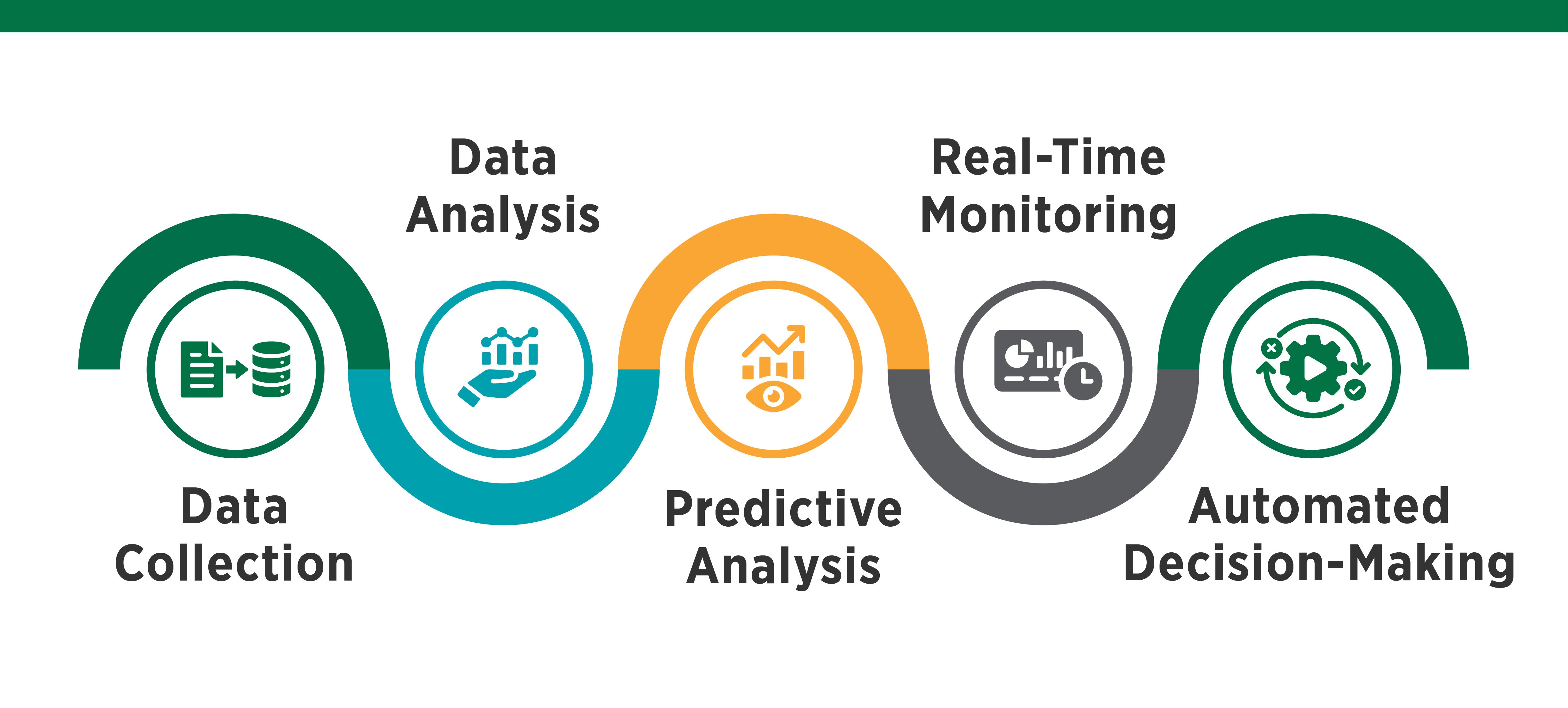
Built on that forecast, a replenishment strategy that adapts to demand typically includes:
▪️Segmenting products by demand pattern and shelf life.
▪️Planned replenishment for known seasons and promotions.
▪️Demand-led replenishment for steady fast movers.
▪️Inventory positioned closer to regional demand.
▪️Delivery models matched to each channel.
▪️Continuous performance review and adjustment.
Segmentation is the foundation. Fast movers with steady demand can be replenished frequently based on actual consumption, while seasonal and promotional products need to be planned and positioned ahead of time. Products with short shelf lives need tighter stock levels and strict rotation, such as first-expiry, first-out.
But even the best strategy is only as strong as the logistics that executes it. Without a logistics partner that provides real-time visibility, flexible capacity, and the right transport options, a well-designed plan can still fall apart on the ground.
Building the right replenishment strategy requires a capable logistics partner with full operational visibility, data-driven insights, and the flexibility to adapt smoothly to changing demand without compromising service levels or costs. The right 3PL partner turns replenishment from a static plan into a responsive operation through five key capabilities.
Smart replenishment starts with knowing what is in stock, where, and how fast it moves. Real-time inventory visibility across warehouses, combined with analytics on order patterns and stock movement, helps brands identify demand patterns across seasons, locations, and channels, and plan replenishment around them. It also helps spot unexpected shifts early, so adjustments can be made before gaps appear. This is where data-driven logistics turns information into better replenishment decisions.
Demand rises and falls throughout the year, and warehousing operations need to scale with it. A flexible 3PL partner can scale operations up for high-demand periods, adding storage space, labor, and handling capacity, then scale them back down once demand settles. This keeps receiving, picking, and dispatch running at the right pace in every season, so brands have the capacity they need without carrying it all year. Learn more about managing throughput during peak seasons.
With in-house logistics, brands often end up paying for capacity sized for their busiest weeks. A 3PL's flexible cost model means paying only for what you actually use, turning fixed logistics costs into variable ones that move with demand. See the true cost of in-house logistics vs. 3PL.
As the category mix shifts across seasons, so do storage and transport requirements. With ambient, chilled, and frozen capabilities under one operation, brands can replenish their full range, from dry goods to dairy and frozen products, through one coordinated network instead of several providers. Read more on cold chain logistics.
Different channels need different delivery models. Full truckload (FTL), less-than-truckload (LTL), and dedicated trucks let brands match each delivery to the order size, frequency, and route, from full-truckload replenishment for large retail chains to smaller, more frequent deliveries to branches. When the fleet is connected to the warehouse, integrated warehousing and transportation keeps replenishment moving without delays at the handoff.
At Starlinks, our integrated 3PL model connects warehousing, transportation, technology, and operational flexibility to support smarter replenishment across your network. Built for FMCG, retail, and F&B distribution, it gives brands the infrastructure and visibility to keep inventory moving with demand.
Starlinks operates a national warehousing network with multi-temperature capabilities, helping brands position inventory closer to demand across the Kingdom. With hubs in key cities, brands can hold stock where it sells, shorten replenishment lead times, and respond faster when demand shifts between regions.
▪️Polaris, Riyadh: multi-temperature hub, 44,000 pallets.
▪️Thuraya, Riyadh: ambient hub, 51,000 pallets.
▪️Atlas, Jeddah: ambient hub, 25,000 pallets.
Together with facilities across Riyadh, Jeddah, Dammam, Madinah, Qassim, and Khamis Mushait, this network gives brands the flexibility to position stock by region and balance inventory closer to where it sells.
The warehousing network is connected to an integrated transportation network built for nationwide FMCG and retail distribution, including hub transfers, store delivery routes, and cross-docking where faster product flow is needed. This includes:
▪️Dry, ambient, chilled, and frozen transport.
▪️Hybrid multi-temperature options.
▪️FTL, LTL, and dedicated vehicles.
▪️GPS tracking and route optimization.
Integrated warehouse and transport management systems, along with the Starlinks Customer Portal, give brands real-time visibility over stock levels, order status, and delivery performance, supported by KPI dashboards and SLA reporting. Combined with experience across different sales channels, this helps brands replenish every channel the way it needs to be served. Each account is also supported by a Customer Experience account manager, who oversees day-to-day performance and acts as a single point of contact.
FMCG and retail demand in Saudi Arabia will keep shifting across seasons, regions, branches, and customer groups. Replenishment strategies that can't move with it will continue to create stockouts in one place and excess stock in another.
The brands that stay ahead are those that build flexible, data-led replenishment strategies and partner with a logistics provider that can execute them across the network. With the right visibility, capacity, and transport behind it, replenishment stops being a constant correction and becomes a reliable driver of availability and growth.