Blogs
September 14, 2026
8
Mins Read
 The News RoomBlogsCold Chain Logistics for Food Manufacturers in Saudi: From Warehousing to Distribution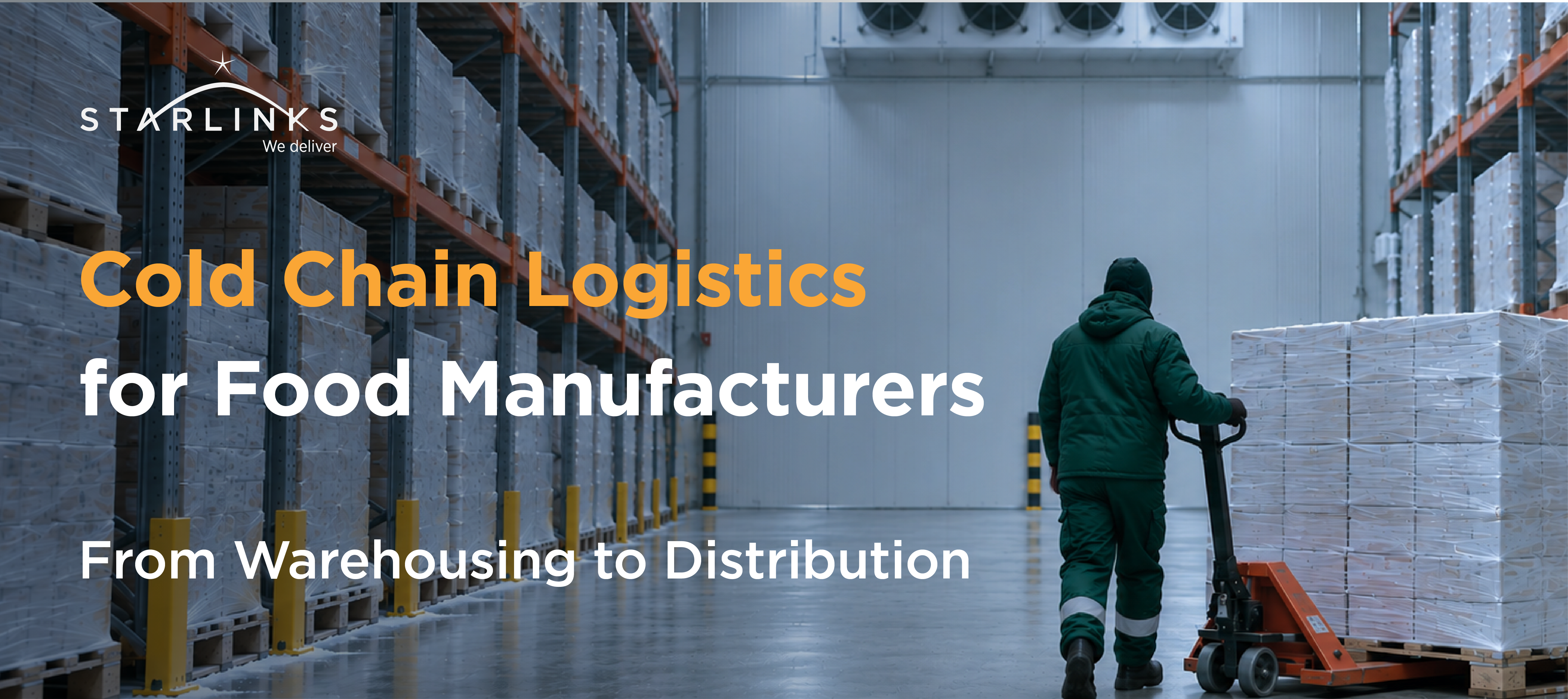
Saudi Arabia’s food and beverage industry continues to expand, putting more pressure on food manufacturers to scale production without compromising product condition. Official Vision 2030 sector material points to growth from SAR 154 billion in 2019 to SAR 214 billion by 2030, while the growing scale of industry events such as Saudi Food Manufacturing and The Saudi Food Show reflects the continued development of the Kingdom’s food industry. This year, both events will take place together at Jeddah Superdome from 27–29 September 2026, bringing food manufacturing, production technologies, suppliers, brands, buyers, and the wider F&B ecosystem onto one platform.
For food manufacturers, this creates an important reality. Production quality and quality control may set the standard inside the factory, but once products move into the post-production chain, maintaining that condition depends heavily on the strength of cold chain logistics.
That is why cold chain logistics is more than storage or transportation alone. From warehousing and handling to temperature-controlled distribution, it becomes the system that helps maintain product condition and quality, protect shelf life, and support distribution readiness for chilled, frozen, and temperature-sensitive food categories across Saudi Arabia.
The challenge for food manufacturers does not end when a product is packed and approved for release. That is only the point where the nature of control changes. Inside production, quality is managed through process discipline and checks. After production, quality must be maintained through environment, timing, handling, and movement.
In cold chain food logistics, that handoff is critical. A product that leaves production in the right condition can still be compromised later by slow transfer into storage, poor staging, temperature deviation, weak transport control, or a delayed final handover. Starlinks’ own cold-chain content makes this point clearly: temperature-sensitive products can be compromised at multiple stages if warehousing, transportation, and technology do not operate as one integrated system.
For food manufacturers, then, cold chain logistics is not just about moving products. It is about protecting shelf life, reducing spoilage risk, preserving consistency, and making sure products reach the next node in the supply chain ready for sale or use.
Once products leave production, the next stage becomes critical. This is the point where finished goods move out of the manufacturing environment and into the logistics environment, and where food manufacturers begin relying on cold chain operations to maintain product condition, quality, and shelf life.
The handover from production to warehousing is one of the most sensitive points in the cold chain. If finished products are staged too long, transferred slowly, or exposed to the wrong conditions before put-away, product condition can begin to deteriorate before distribution even starts.
That is why receiving and put-away matter so much in food warehousing. Products need to move quickly from production or inbound receipt into the correct temperature zone, with minimal time spent outside controlled conditions. Staging discipline and dock scheduling also play an important role here, helping reduce unnecessary delays at the point where product exposure risk is highest.
Strong cold chain warehousing depends on having the right storage setup for different product types. Food manufacturers may need ambient, chilled, frozen, or integrated multi-temperature environments depending on the product category, shelf-life requirements, and downstream distribution plan. In well-designed operations, each zone is controlled according to its specific temperature requirement while still supporting efficient movement across the wider warehouse.
.jpg)
But the setup alone is not enough. Product handling inside the warehouse matters just as much. This includes how products are staged, moved, picked, and prepared for dispatch, along with the operating discipline used to reduce unnecessary temperature exposure. It can also include specialized handling where tighter control is required. In that sense, cold chain warehousing is not just about holding stock, but about managing flow under the right conditions.
Cold chain warehousing also relies on strong inventory control. For food manufacturers, it is not enough to know that stock is available. The warehouse also needs visibility over the details that affect movement, shelf life, and distribution decisions.
▪️Batch numbers.
▪️Expiry dates.
▪️Storage location.
▪️Temperature zone.
▪️Movement priority.
This is where batch control, expiry management, and FEFO become especially important. When products are managed with the right visibility and rotation discipline, manufacturers can reduce waste, protect remaining shelf life, and make distribution decisions with more confidence. Real-time warehouse visibility also improves response when demand changes or replenishment needs to accelerate, helping maintain stronger control as products move toward the next stage of distribution.
If warehousing maintains product condition at rest, distribution tests whether that condition can be preserved in motion. For food manufacturers serving multiple regions, channels, and customer types across Saudi Arabia, temperature-controlled distribution is critical to maintaining product quality and shelf life beyond the warehouse.
The distribution operation needs the right transportation setup and controls to keep products within their required conditions throughout the journey.
▪️Temperature-controlled transportation for chilled and frozen products.
▪️Multi-compartment vehicles with different temperature zones.
▪️Temperature monitoring and recording throughout the journey.
▪️Route planning and optimized delivery sequences.
▪️Controlled loading, unloading, and door handling.
▪️Documented handovers between distribution points.
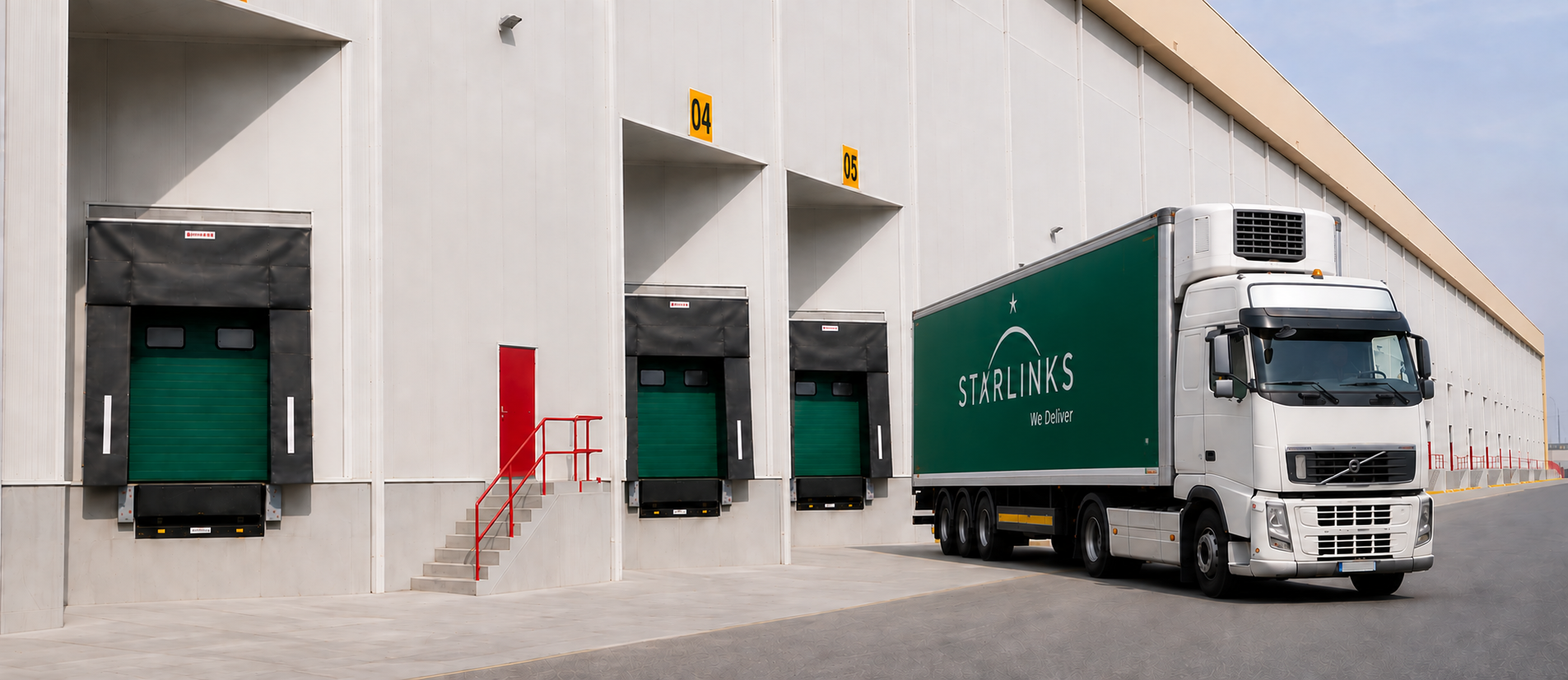
However, equipment alone is not enough. Route planning, loading sequence, stop order, door discipline, and handover timing can all affect temperature integrity. Transportation management systems can help reduce transit time and exposure, while documented handovers provide better control over product condition as goods move between locations.
For food manufacturers, distribution is therefore not simply the final step after warehousing. It is a continuation of the same cold chain responsibility, helping ensure products reach the next point in the supply chain in the condition they were meant to be in.
For most food manufacturers, cold chain failures do not usually begin with one major collapse. They begin with smaller gaps across the operating chain.
▪️Slow transfer from production to storage.
▪️Improper loading and offloading procedures.
▪️Temperature exposure during warehouse-to-transport handovers.
▪️Transport conditions that do not match product requirements.
▪️Delays during final delivery or customer handover.
These breakdown points matter because cold chain performance is cumulative. A short exposure during staging, a poorly sequenced delivery route, or a delayed handover at destination may seem manageable in isolation, but together they can shorten shelf life, increase spoilage risk, and weaken service reliability. In Saudi conditions, where heat and distance add pressure, small failures can escalate quickly.
Food manufacturers need more than cold storage space and refrigerated trucks. They need a cold chain logistics operation that can maintain product condition throughout the post-production journey, from the moment products leave the factory to their final destination.
▪️Multi-temperature warehousing network.
▪️Temperature-controlled transportation fleet.
▪️Strict temperature control standards and procedures.
▪️End-to-end temperature tracking and documentation.
▪️Real-time inventory tracking and shipment visibility.
▪️Food-grade and compliance-ready operations.
▪️Batch and expiry visibility and management.
▪️Fast warehouse-to-distribution flow.
These capabilities work together to maintain product condition and keep the flow of goods under control. Efficient cold chain logistics depends not only on the right storage and transportation infrastructure, but also on how well these operations are connected. Fewer handovers, better coordination, and stronger visibility can help reduce delays, minimize temperature exposure, protect shelf life, and support more reliable distribution.
For food manufacturers, an effective cold chain logistics partner should have the infrastructure, technology, temperature controls, and operational capabilities needed to maintain product condition from post-production through distribution.
Starlinks supports food manufacturers with an integrated cold chain built around multi-temperature infrastructure, temperature-controlled transportation, continuous monitoring, and food-grade operations. Its national network is designed to maintain product condition from post-production storage through distribution across Saudi Arabia.
Starlinks operates a multi-temperature network supporting ambient, chilled, and frozen products across strategically located facilities in Riyadh, Jeddah, Dammam, Qassim, Madinah, and Khamis Mushait. Polaris serves as the dedicated cold chain facility in Riyadh, with advanced multi-temperature zones for temperature-sensitive products. The network supports centralized inventory positioning closer to key demand centers, helping improve distribution speed, capacity, and scalability during demand peaks.
The warehousing network connects to temperature-controlled transportation covering dry, ambient, chilled, and frozen requirements, with multi-compartment vehicles available for loads requiring different temperature zones within the same journey. GPS tracking and route optimization support controlled movement, while temperature monitoring and recording provide visibility into product conditions throughout storage and transportation, helping identify deviations and maintain documented temperature history.
Cold chain operations are supported by food-grade processes and compliance controls, while WMS and TMS connect inventory, warehouse execution, transport planning, and delivery. This gives food manufacturers stronger visibility and control across the movement from warehouse to delivery.
Together, these capabilities create a cold chain that is controlled, monitored, documented, and connected from post-production storage through final distribution.
Food manufacturers work hard to maintain product quality before goods leave production. Protecting that quality throughout the rest of the journey requires a cold chain built around the right infrastructure, controls, and operational capabilities.
Cold chain warehousing and distribution therefore should not be treated as separate functions. From multi-temperature storage and controlled transportation to temperature monitoring, compliance, and real-time visibility, each stage plays a role in maintaining product condition, protecting shelf life, and keeping food moving safely and efficiently.
For food manufacturers in Saudi Arabia, the right cold chain logistics partner should provide more than storage and transportation. It should bring the network, technology, processes, and operational expertise needed to maintain product condition from post-production through final delivery.