Blogs
August 2, 2026
8
Mins Read
 The News RoomBlogsWarehousing and Transportation: Why Integration Simplifies FMCG & Retail Distribution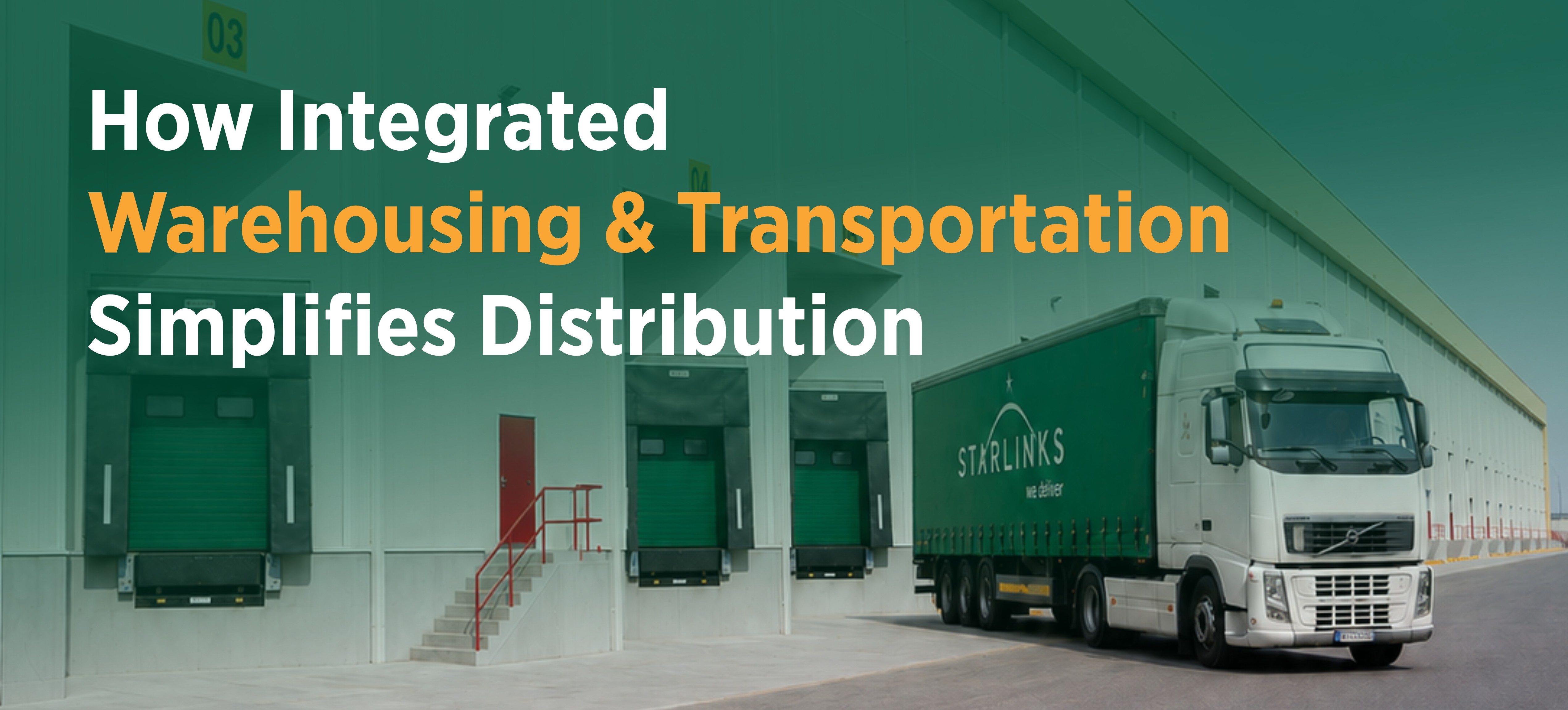
In FMCG and retail distribution, the challenge is not warehousing alone or transportation alone. It is whether both functions operate as one coordinated system. When they are managed separately, across different providers, teams, or systems, even well-run operations can lose efficiency at the handoff points between storage, dispatch, and delivery.
An order may be picked on time but not staged against the transport plan. A vehicle may arrive as scheduled but still face delays at loading. Inventory may be visible in one system without being fully aligned to delivery execution. On their own, these issues may seem manageable. Across a high-volume distribution network, they can quickly translate into slower flow, higher cost, and weaker service consistency.
That is where integrated warehousing and transportation adds value. By connecting warehouse operations and delivery execution within one operating model, businesses gain better visibility, stronger coordination, and more control from warehouse to delivery. For FMCG and retail brands in Saudi Arabia, that makes distribution not only more efficient, but much easier to manage at scale.
Warehousing and transportation may be managed as separate functions, but in FMCG and retail distribution they shape the same outcome: getting products to the right place, on time, and in the right condition. The issue is not whether each function performs well on its own. The issue is whether both are aligned closely enough to support fast-moving volumes, retail delivery windows, and consistent product availability.
When these functions are managed separately, the wider operation becomes harder to control. A warehouse may be working to its own targets, while transportation is working to its own schedule. But if both sides are not planned together, the pressure shows up in the distribution flow, especially where speed, freshness, and service consistency matter most.
▪️Orders are not ready when vehicles arrive.
▪️Retail delivery windows are missed.
▪️Fast-moving products reach stores too late.
▪️Temperature-sensitive products face higher risk at dispatch.
▪️On-shelf availability suffers when replenishment is delayed.
These issues may seem manageable in isolation, but across a large distribution network they can increase cost, weaken service levels, and create more day-to-day complexity for the brand. That is why the real challenge is not simply having warehousing and transportation in place. It is making sure both work together as one connected operation.
Integrated warehousing and transportation is not simply about using the same provider for storage and delivery. It means both functions are managed as one operating model, with shared planning, shared visibility, and clear accountability across the full distribution flow. For FMCG and retail businesses, that matters because warehouse activity and delivery execution need to move in line with each other, not as separate processes.
▪️Storage and delivery follow the same plan.
▪️Orders are staged before vehicles arrive.
▪️Warehouse and transport teams work from the same live data.
▪️One team owns performance from storage to delivery.
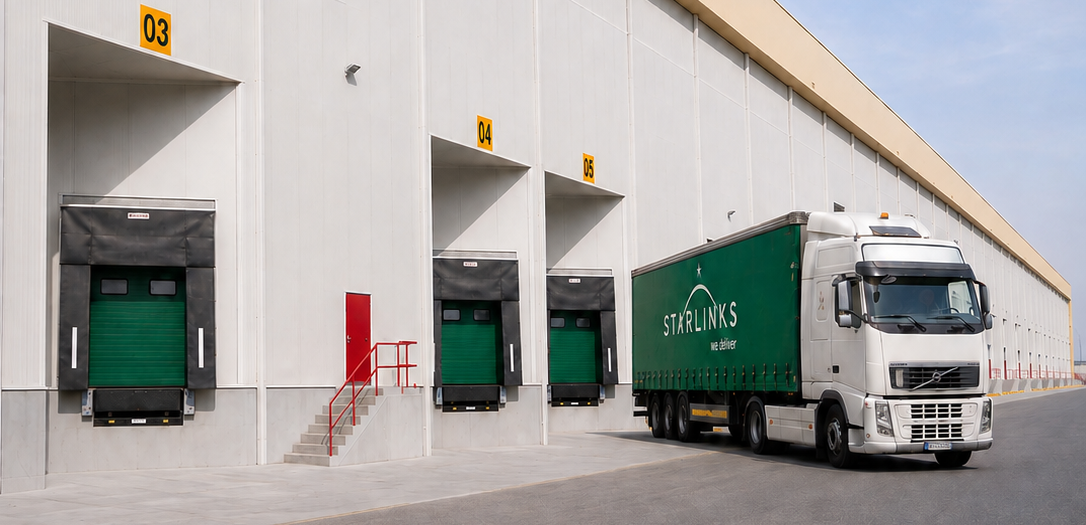
The difference is not just operational. It is structural. In a separated model, warehousing and transportation are coordinated after the fact. In an integrated model, they are built to work together from the start. That creates better flow, stronger visibility, and a simpler way to manage FMCG distribution at scale.
When warehousing and transportation are managed by the same 3PL partner, both functions can operate as one connected system instead of two separate services. That makes FMCG distribution easier to manage because storage, staging, dispatch, and delivery are planned together, with one team responsible for execution. The result is better coordination, clearer accountability, and more efficient day-to-day operations across the distribution flow.
In an integrated warehousing and transportation model, products move through the distribution network with fewer delays because storage, staging, loading, and dispatch are planned together. Orders are prepared in line with vehicle schedules, which improves warehouse to delivery flow and supports faster FMCG distribution and retail distribution. This also helps reduce idle time at the dock and keeps fast-moving products moving to stores on time.
When warehousing and transportation services are aligned under one operating model, businesses avoid many of the hidden costs that come with separate providers. Waiting time, missed loading windows, duplicated handling, and underused vehicle capacity are reduced. Over time, this improves supply chain efficiency and creates a more cost-effective integrated logistics model for FMCG logistics.
With one third-party logistics provider managing both warehousing and transportation, there is one team responsible for performance from warehouse to delivery. That means one SLA, one reporting structure, and clearer ownership when service issues need to be resolved. For brands looking for end-to-end logistics and a reliable logistics partner, this makes distribution easier to manage.
During Ramadan, Hajj, and major promotions, volumes can increase quickly across FMCG distribution. When the same 3PL partner manages warehousing and transportation, storage capacity, labor planning, and transport availability can flex together. This helps reduce bottlenecks, supports faster replenishment, and keeps retail distribution more stable during peak demand periods.
An integrated logistics model gives businesses better inventory visibility across storage, dispatch, and delivery execution. Warehouse and transport teams work from the same data, making it easier to prioritize urgent orders, support cross-docking where needed, and respond faster to changing demand. The result is better control across FMCG warehousing, last-mile delivery, and the wider distribution flow.
Integrated warehousing and transportation does not remove the complexity of FMCG distribution. It manages that complexity through one connected operating model under one 3PL partner, with less friction between warehousing and transportation and better control across the supply chain.
Starlinks delivers integrated warehousing and transportation through one connected 3PL model built for FMCG and retail distribution. By bringing together warehousing, transportation, cold chain capabilities, advanced infrastructure, and integrated technology systems, Starlinks helps businesses manage product flow more efficiently from warehouse to delivery. The result is better coordination, stronger product integrity, and greater control across distribution operations in Saudi Arabia.
Starlinks supports FMCG warehousing through a national network built for the realities of FMCG and retail distribution in Saudi Arabia. The network combines ambient and multi-temperature storage capabilities, modern flagship facilities, and the operational scale to handle high volumes, seasonal demand, and fast growth. For brands expanding across the Kingdom, this means better inventory positioning, stronger product integrity, and a centralized warehousing setup that can support distribution at scale.
▪️Polaris - Riyadh multi-temperature hub. (44,000 pallet positions | 44 loading bays)
▪️Thuraya - Riyadh ambient logistics hub. (51,000 pallet positions | 34 loading bays)
▪️Atlas - New Jeddah ambient hub, coming live soon. (25,000 pallet positions | 30 loading bays)
Together with facilities across Riyadh, Jeddah, Dammam, Madinah, Qassim, and Khamis Mushait, Starlinks offers a centralized warehousing network that keeps inventory closer to demand and supports faster, more efficient distribution across Saudi Arabia and into the GCC.
Starlinks connects its warehousing hubs to nationwide distribution through an integrated transportation network built for FMCG and retail movement across Saudi Arabia. Managed under the same 3PL model as warehousing, the fleet supports hub-to-hub transfers, multi-drop delivery routes, last-mile coverage, and cross-docking as one connected operation.
The network includes dry, ambient, chilled, and frozen transport, with hybrid multi-temperature options to support different product requirements. Flexible truck options, including FTL, LTL, and dedicated vehicles, are backed by GPS tracking and route optimization, giving Starlinks stronger control over delivery execution from warehouse to final destination.
Technology is a core part of how Starlinks keeps warehousing and transportation connected. For FMCG and retail businesses, it creates better visibility, better coordination, and better control across the full distribution flow.
At the operational level, Starlinks uses a Warehouse Management System (WMS) and Transportation Management System (TMS) to manage daily execution. The WMS supports stock control, order preparation, and dispatch readiness inside the warehouse, while the TMS supports transport planning, route execution, and delivery coordination. Together, they help warehousing and transportation work from the same operational picture.
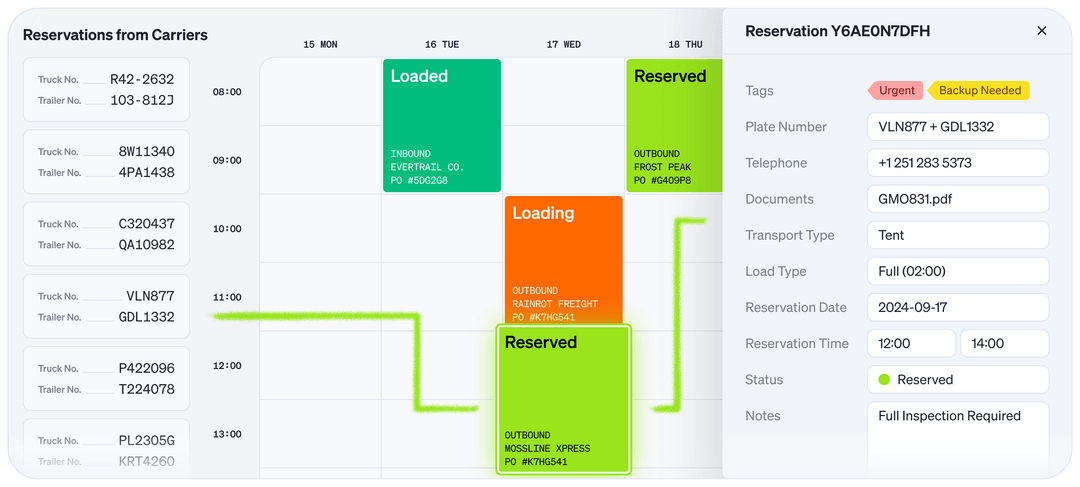
Starlinks also uses a dock scheduling system to improve flow at the handover point between warehouse and transport. Automated appointment booking, real-time dock availability, carrier self-service, and queue management help reduce waiting time, improve loading efficiency, and prevent avoidable detention fees.
For customers, Starlinks LAUNCHPAD provides centralized access to live dashboards for order status, stock levels, delivery SLAs, and billing. Supply chain and commercial teams can work from the same view, with faster access to the information they need. Combined, these fully integrated systems support smoother execution from warehouse to delivery.
Integrated warehousing and transportation works best when both functions are managed under one 3PL partner. For FMCG and retail businesses, that means better coordination, stronger visibility, and more reliable distribution from warehouse to delivery.
In Saudi Arabia, where scale, speed, and product integrity all matter, a connected model makes distribution easier to control and easier to grow. Starlinks brings warehousing, transportation, and technology together in one integrated operation built for FMCG and retail distribution.