Blogs
October 20, 2026
8
Mins Read

Seasonal sales are some of the most important moments in e-commerce. Around the world, a few peak periods can shape a brand's results for the entire year. In Saudi Arabia, these include Ramadan, Saudi National Day, and White Friday, along with other campaigns throughout the year.
Peak seasons reward brands that prepare early, and preparation goes beyond discounts and ad budgets. A campaign can bring in record orders and still disappoint customers if stock runs out, orders ship late, or returns processing and refunds take too long. Results depend on how well the campaign and the operation behind it work together.
This article covers both sides: planning a peak season campaign that drives sales, and preparing your e-commerce fulfillment, delivery, and returns to keep up with it, with a closer look at White Friday.
For e-commerce brands, peak season is more than a sales spike. It's a stress test for the entire business, where a large share of the year's sales, new customers, and brand perception are decided in a few weeks.
Demand rises faster than most operations can adapt. Marketing can multiply traffic overnight, but warehousing, order fulfillment, and last mile delivery can't scale on short notice. That gap is where most peak season failures begin.
▪️Lost sales from stockouts on best-sellers.
▪️Late deliveries that trigger cancellations and complaints.
▪️Order errors that turn into returns and refunds.
▪️Poor reviews that hurt customer trust.
▪️New customers who never return.
Marketing creates demand, but logistics decides whether that demand turns into loyal customers.
Every peak season campaign makes a promise to customers: the right products, at the right price, delivered on time. The strongest e-commerce campaigns are planned around that promise from the start, by anticipating which products will be in high demand during the season and building offers around what the business can actually stock, fulfill, and deliver.
Good campaign planning starts with data, not discounts. Review previous peak season performance by product and category: which products generated the most revenue and profit, what sold out early, what moved slowly, and when order volumes peaked during the campaign. These patterns give you a realistic picture of demand and show where to focus your inventory and marketing budget.
Products with proven demand should anchor your peak season plan, since they're the ones most likely to drive revenue. But peak season is also one of the best moments to launch something new. Higher traffic and customers' greater willingness to buy give new products a level of visibility that's hard to achieve at any other time of the year. To make the most of it, new launches need to be live, stocked, and ready to ship before the campaign begins.
When every brand is running discounts, price alone rarely wins the customer. Well-built bundles and promotional packages create stronger value, protect margins, and raise average order value. Pairing best-sellers with slower-moving products also helps clear inventory that would otherwise tie up warehouse space after the season. Plan bundles with your fulfillment partner early, since preparing them in advance keeps order processing fast once volumes rise.
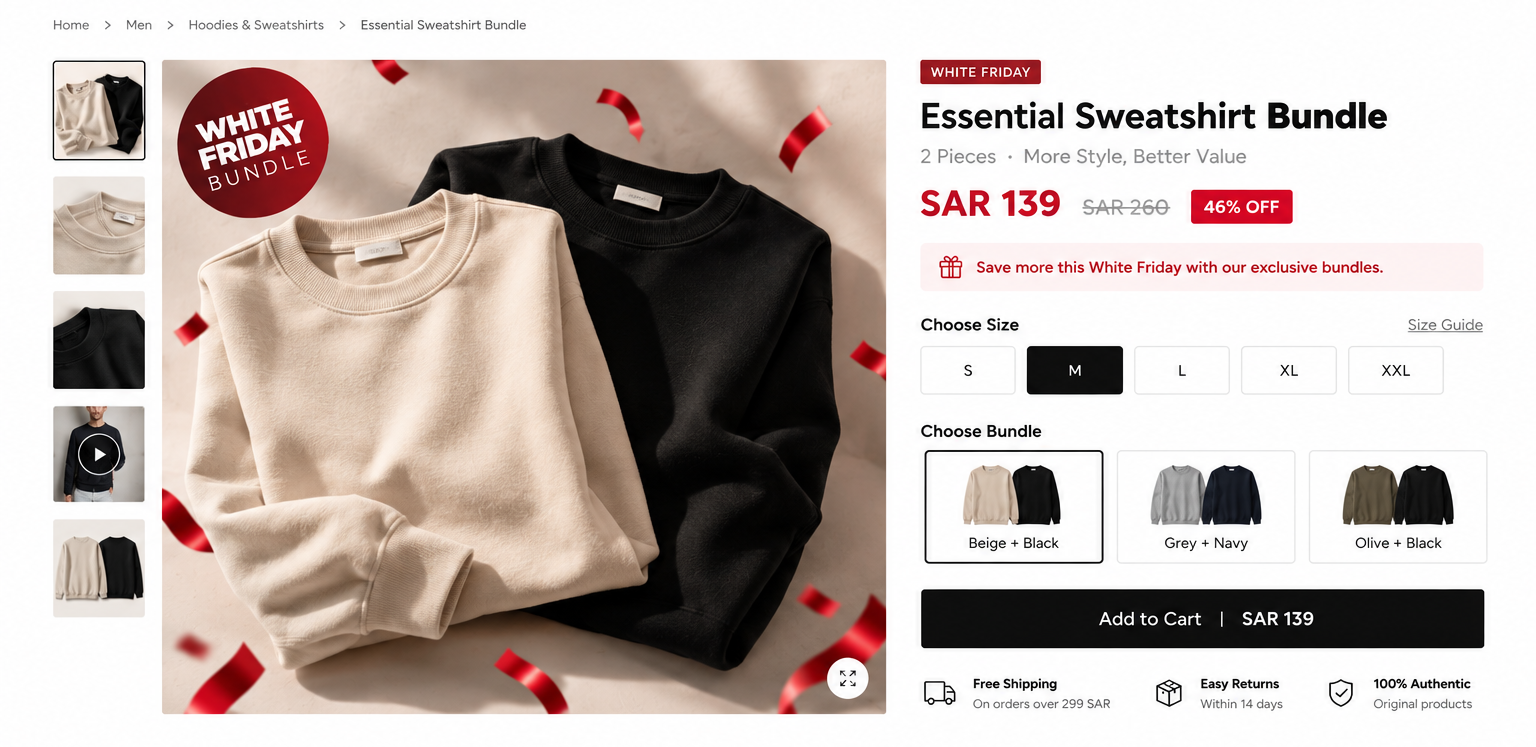
Pricing decisions should follow a clear promotional calendar: which products get the deepest discounts, when each offer goes live, and how long it runs. That calendar becomes the shared plan for marketing, sales, and the logistics team preparing to fulfill the orders it creates.
Your e-commerce store is where the campaign either turns visits into orders or loses momentum. Every ad, post, and influencer mention ultimately leads customers back to your website, so it needs to carry the campaign at every touchpoint: the homepage, banners, product pages, and checkout. A consistent, well-planned store experience tells customers instantly that something special is happening, and gives them reasons to stay, buy, and come back. On your website, focus on:
▪️Campaign theme: makes the offer clear on every page.
▪️Launch countdown: builds anticipation before the sale.
▪️End-of-sale countdown: drives urgency until the final hour.
▪️Flash deals and games: keep traffic high all campaign.
▪️Daily competitions: give a reason to visit every day.

Build excitement before the sale even begins. Teasers across social media and email get customers talking and waiting for the start, and a creative short video often does this best, as one strong piece of content can spread quickly and reach far beyond your usual audience.
Throughout the campaign, follow a clear content calendar across every channel, so excitement stays high every day instead of spiking at launch and fading in the middle. Each campaign push also creates its own spike in orders, so share the timing with your fulfillment team.
During peak season, every brand is competing for the same attention, and even the best offers only work if the right customers see them. Influencers, Google ads, and social media ads each bring shoppers in from a different direction, and the strongest campaigns combine all three:
▪️Influencers: build trust and increase reach and traffic.
▪️Google ads: capture shoppers actively searching.
▪️Social media ads: drive awareness and reach new customers.
Not every influencer is the right fit. Choose trusted voices whose audience is relevant to your products, since credibility matters more than follower count. Then split their content across the campaign period: at launch to announce the offers, mid-campaign to remind followers, and in the final days to drive urgency.
For paid ads, keep the campaign message consistent in every ad copy, so customers instantly know the offer and when it ends. Focus Google ads on best-sellers and hero products, tailor social media creative to each platform, and use retargeting to bring back shoppers who didn't buy. Each phase of the campaign creates its own spike in orders, which is why your ad schedule matters to your logistics partner as much as to your marketing team.
After placing an order, customers care about one thing: whether it arrives on time. Keeping that promise depends on your logistics partner, from order fulfillment in the warehouse to last mile delivery at the door, and peak season puts both under the most pressure of the year. Sharing your forecast early gives them time to prepare.
Running out of a best-seller mid-campaign is one of the most expensive peak season mistakes. Avoid it by sharing your full demand forecast and marketing plan with your logistics partner, with exact dates for every offer and push, so there are no surprises. Your partner can then position stock based on expected demand, prepare promotional bundles early, and be ready for the peak in advance. Real-time inventory sync with your sales channels also prevents selling products you no longer have.
Order volumes can multiply within days. Your logistics partner needs the space, people, and systems to scale fulfillment up for the peak and back down afterward without performance dropping, along with the insight to know what to scale. The cost benefit is clear: instead of paying for extra capacity all year, you scale only when demand justifies it.
Order processing is where the customer experience is physically built. Every order that leaves the warehouse is what the customer will hold in their hands. A capable logistics partner keeps order fulfillment fast and accurate, even at peak volume.
▪️Robotics for fast, accurate picking.
▪️Barcode scanning at every step.
▪️Bundles prepared before launch.
▪️Quality checks before sealing.
▪️Clear cut-offs for same-day dispatch.

Presentation matters just as much. Orders should arrive clean, well protected, and packed in a way that reflects your brand. Branded boxes, gift wrapping, and personalized inserts turn a standard delivery into an unboxing moment customers remember.
Peak season doesn't lower expectations. Many shoppers still expect same-day or next-day delivery, so your partner's last mile network needs the capacity to handle the surge. The best experience comes from setting clear expectations and exceeding them. Live tracking and proactive updates keep customers informed, and even when an order is delayed, customers value honesty and quick responses far more than silence.
Returns rise sharply during and after major campaigns. Every day a product spends in the return process is another day you can't sell it. A strong logistics partner speeds this up with easy drop-off, fast quality checks, and quick restocking, getting products ready to resell while demand is still at its peak. For customers, a faster return means a faster refund, and a better chance they'll shop with you again.
Few brands can build peak-ready warehousing, fulfillment, and delivery on their own, which makes the choice of e-commerce logistics partner one of the most important peak season decisions. The right partner works as an extension of your team, sharing forecasts, reviewing performance, and solving problems before they reach your customers.
That's what Starlinks was built for. At the heart of it is a SAR 100 million fulfillment facility with more than 250 autonomous robots and the capacity to process 4.8 million units a month, designed to absorb peak season volumes without losing speed or accuracy.
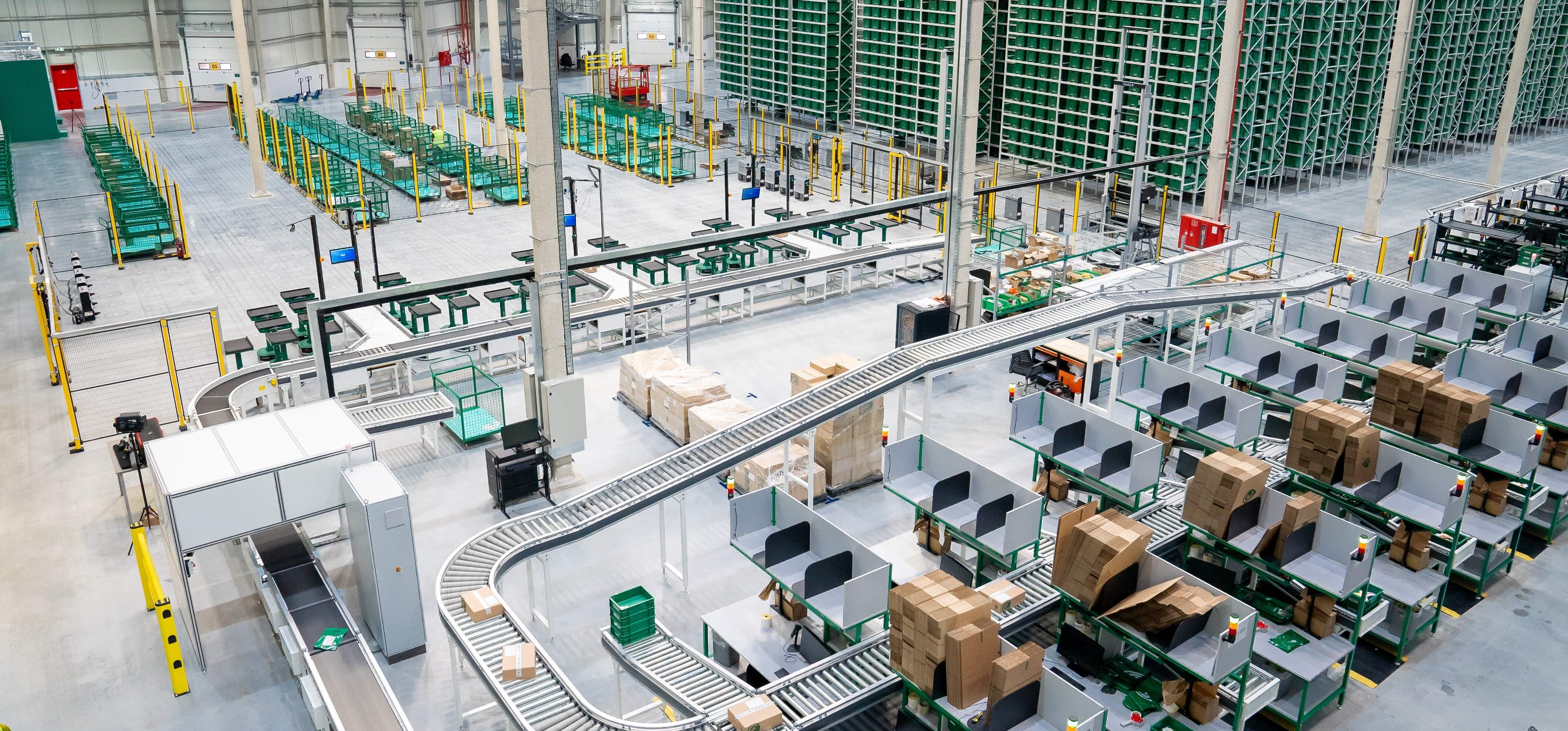
▪️60,000 orders per day capacity.
▪️Accurate & fast robotics fulfillment.
▪️Same and next-day delivery in major cities.
▪️Live tracking and full visibility.
▪️65+ e-commerce platform integrations.
▪️Label-less returns with rapid QC turnaround.
Beyond scale, what sets Starlinks apart is category-specific fulfillment. Fashion, beauty, perfume, and electronics each get processes built around their handling needs and the premium experience their customers expect, supported by value-added services such as:
▪️Personalization and gift wrapping.
▪️Kitting and promotional bundles.
▪️Luxury unboxing experience.
▪️Garment hanging and steaming.
▪️On-site studio for product photography.
▪️FEFO and batch management for beauty.
▪️Serial and IMEI tracking for electronics.
The results hold up under pressure. Brands For Less, one of our biggest e-commerce clients, achieved 3X growth with Starlinks while maintaining a 98% SLA, even through Ramadan, White Friday, and other peak seasons.
The result is simple: everything an e-commerce brand needs to win White Friday and every peak season after it, under one roof and one partner.
Peak seasons are where e-commerce brands make their biggest gains, or their most costly mistakes. A strong campaign brings customers in, but what happens after checkout decides whether they come back.
The brands that succeed plan both sides early: anticipating demand and building the right offers, while making sure stock, fulfillment, delivery, and returns are ready to keep up. Backed by the right logistics partner, peak season becomes a reliable driver of growth.