Blogs
April 15, 2026
7
Mins Read
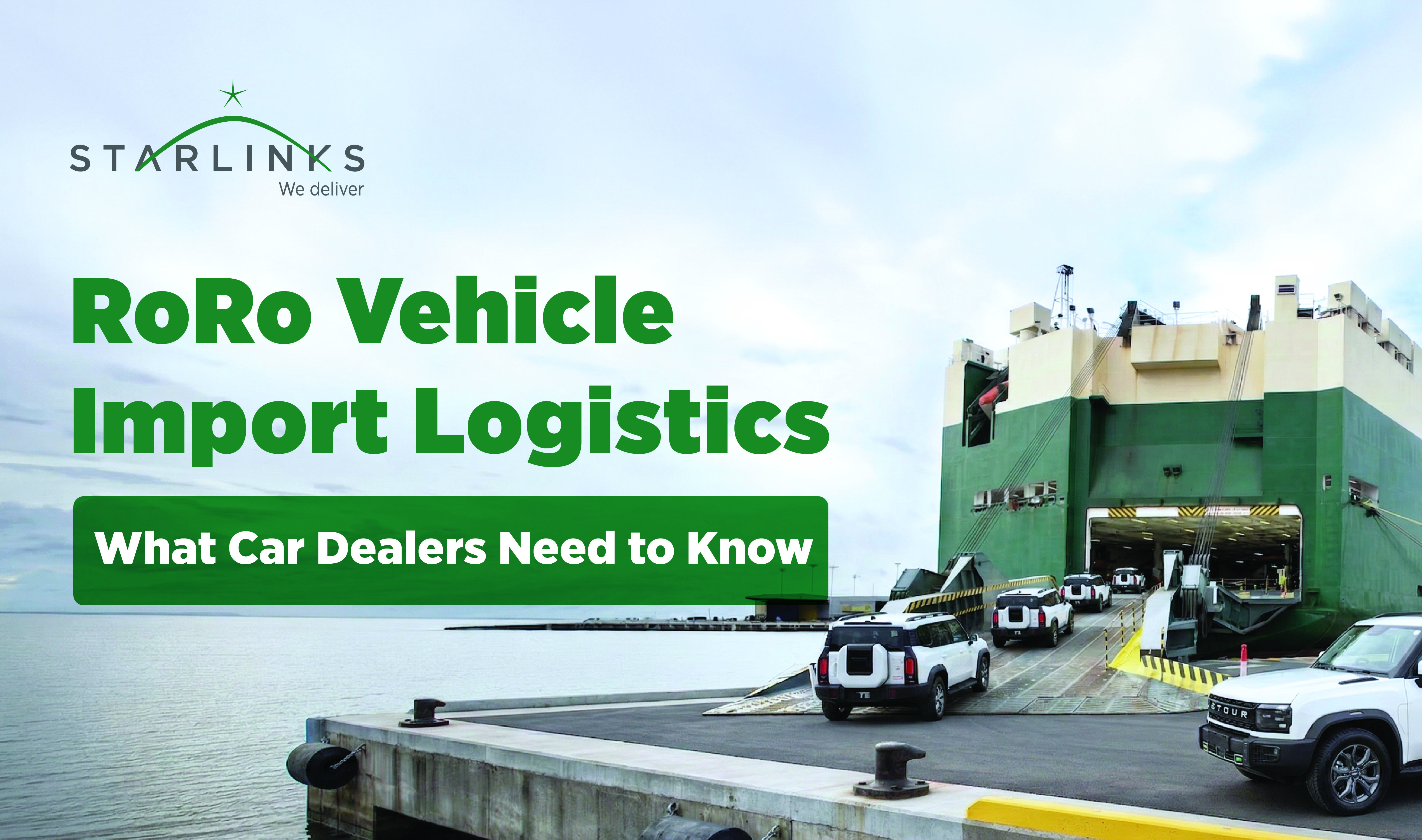
Saudi Arabia's automotive market is experiencing unprecedented growth, and for car dealers operating in the Kingdom, understanding vehicle import logistics is essential for maintaining competitive margins and operational efficiency.
RoRo (Roll-on/Roll-off) shipping has emerged as the dominant method for importing finished vehicles into Saudi Arabia, offering speed, cost-effectiveness, and scalability. Yet the journey from overseas manufacturer to Saudi showroom involves navigating complex customs regulations, port procedures, and compliance requirements that can quickly become overwhelming without proper guidance.
What follows is everything you need to know about RoRo vehicle import, from understanding shipping methods to mastering customs clearance and avoiding costly pitfalls.
RoRo stands for "Roll-on/Roll-off", a specialized shipping method where vehicles are driven directly onto and off dedicated vessels specifically designed and built for transporting wheeled cargo. Unlike conventional cargo ships that require cranes and lifting equipment, RoRo vessels feature built-in ramps and drive-on/drive-off capabilities.

The concept emerged in the 1950s and 1960s as the automotive industry sought more efficient alternatives to the slow, damage-prone process of lifting vehicles with cranes. This innovation dramatically reduced loading times from days to hours, minimized handling damage, and lowered transportation costs; such advantages made RoRo the global standard for finished vehicle logistics, with modern vessels now capable of carrying thousands of vehicles across oceans with unprecedented efficiency.
RoRo vessels function as floating multi-story parking garages with multiple internal decks connected by built-in ramps. Vehicles drive onto the ship, park on assigned decks, and are secured using wheel chocks and tie-downs. Modern RoRo vessels can carry 2,000 to 8,000+ vehicles on a single voyage.
▪️Pure Car Carrier (PCC): Designed exclusively for passenger vehicles.
▪️Pure Car and Truck Carrier (PCTC): Accommodate cars, trucks, buses, and construction equipment.
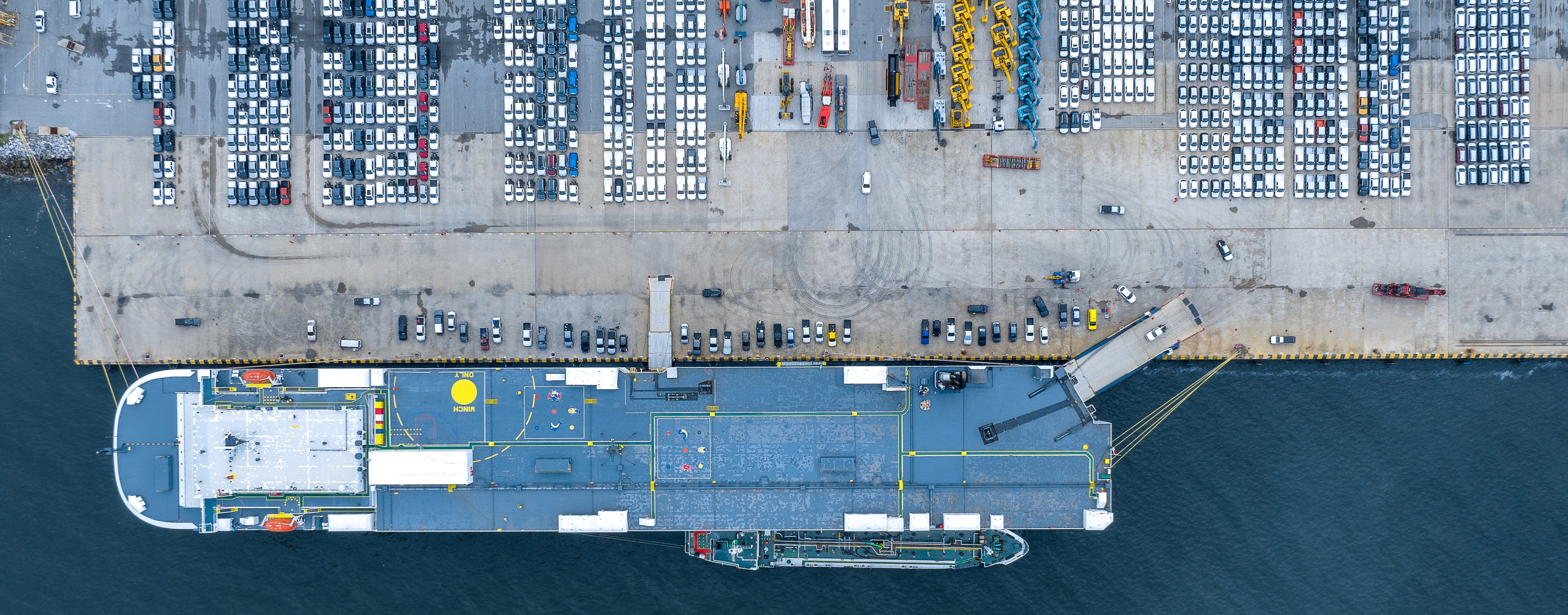
RoRo shipping dominates finished vehicle logistics worldwide for clear reasons. The advantages it delivers aren't incremental improvements; they're fundamental operational and financial differentiators that directly impact dealer profitability.
Speed and efficiency: Loading and unloading operations complete in hours rather than days, reducing port congestion and enabling faster customs processing.
Reduced handling and damage risk: Vehicles drive on and off under controlled conditions with minimal touching, significantly reducing scratches, dents, and mechanical damage common with crane-lifted operations.
Cost-effectiveness for volume: Per-unit transportation costs decrease substantially when shipping multiple vehicles, benefiting dealers with regular inventory replenishment needs.
Scalability: Whether importing five vehicles or fifty, RoRo accommodates varying volumes without requiring different infrastructure or handling procedures
For dealers operating in Saudi Arabia's competitive automotive market, these advantages translate directly into faster inventory turnover, lower damage claims, reduced logistics costs, and improved profit margins.
Use RoRo shipping for:
▪️Operational vehicles ready to drive.
▪️Volume imports (multiple units).
▪️Standard passenger vehicles and light trucks.
▪️Cost-sensitive shipments where budget is the primary concern.
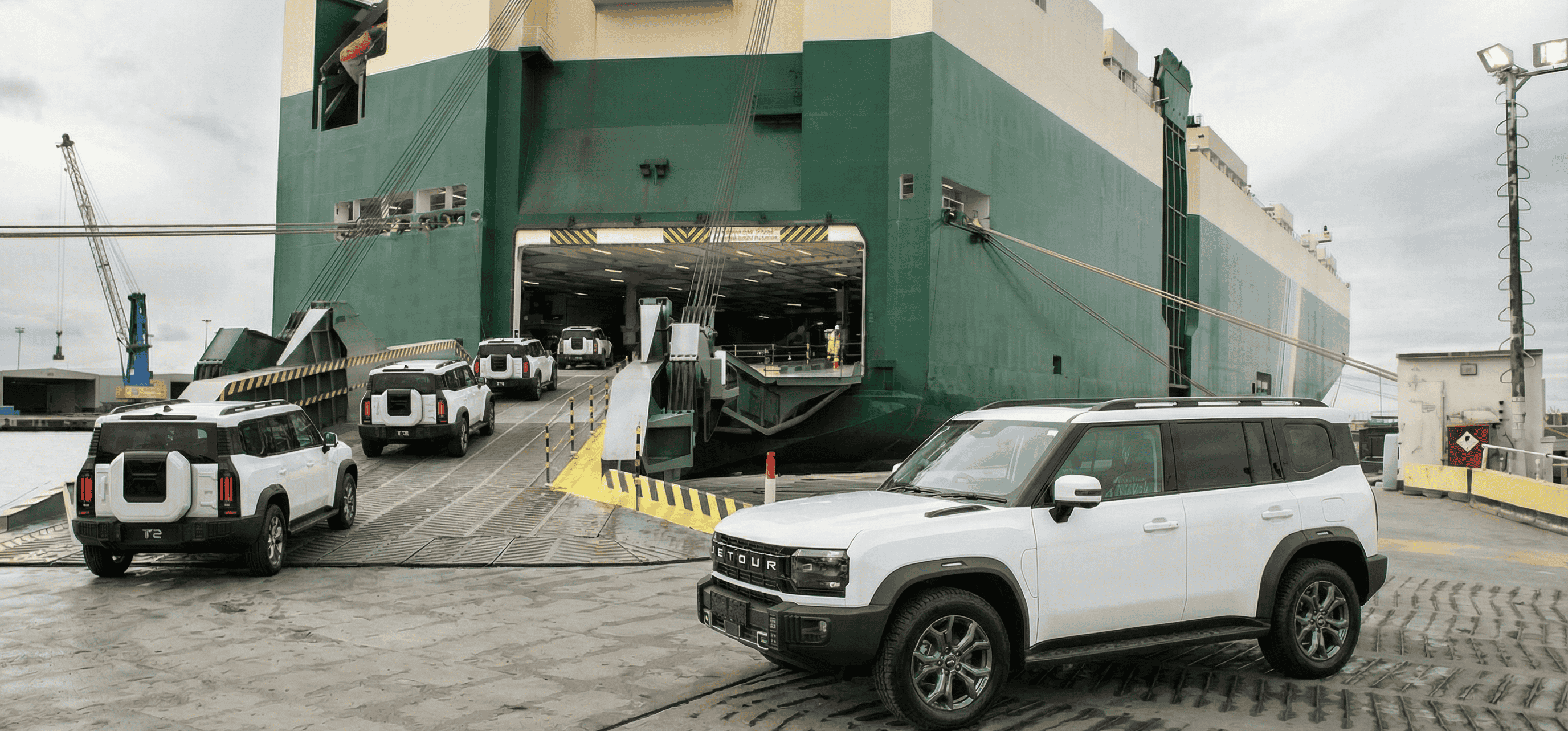
RoRo typically costs 20-40% less than container shipping for standard operational vehicles and offers faster port processing, making it the economical choice for mainstream dealer inventory.
Container shipping is necessary for:
▪️Non-operational or project vehicles that cannot be driven.
▪️High-value luxury or classic cars requiring maximum protection.
▪️Modified vehicles with aftermarket accessories.
▪️Vehicles shipping with spare parts or equipment.

The Bottom Line: For most car dealers importing operational inventory to Saudi Arabia, RoRo shipping delivers the optimal balance of cost, speed, and reliability. Reserve container shipping for non-running vehicles or those requiring maximum protection where the cost premium is justified.
The process begins at the origin country with booking your RoRo connection and selecting the Port of Loading (POL). Major departure ports include US East Coast (New York, Baltimore), US West Coast (Los Angeles), European ports (Bremerhaven, Antwerp), and Asian hubs.
Critical preparation requirements:
▪️Vehicles must be fully operational (functional engine, transmission, steering, brakes).
▪️Complete documentation: Bill of Lading, commercial invoice, vehicle title, export papers.
▪️Pre-load inspection following AIAG standards to document condition.
▪️Delivery to terminal 5-10 days before vessel departure.
Transit times vary by route:
▪️US East Coast to Saudi Arabia: 20-35 days.
▪️US West Coast to Saudi Arabia: 30-50 days.
▪️Europe to Saudi Arabia: 10-20 days.
▪️China to Saudi Arabia: 15-25 days.
Most shipping lines provide live vessel tracking systems, allowing you to monitor your shipment's progress and estimated arrival in real-time throughout the journey. During transit, all shipping documents must arrive at the destination port before or with the vessel; delays in document arrival create serious customs clearance complications.
Two main ports handle vehicle imports:
▪️Jeddah Islamic Port: Primary gateway on the Red Sea coast.
▪️King Abdulaziz Port (Dammam): Eastern coast port serving the Arabian Gulf region.
Upon arrival, vessels berth and discharge begin immediately. Professional drivers unload vehicles to designated staging areas, and the critical timeline begins; Saudi ports provide only 3 days of free storage before charges commence and escalate rapidly.
As of April 2026, the Strait of Hormuz is experiencing unprecedented maritime disruptions due to regional conflict, with vessel traffic reduced from over 130 daily transits to fewer than 10. Nearly 400 ships remain bottlenecked in the region, and experts warn clearance will take months even after conditions stabilize.
Starlinks has adapted proactively. Our finished vehicle logistics network now routes through alternative origins including Shanghai, Lianyungang, Fuzhou, Singapore, and Sri Lanka, with Jeddah as our primary gateway, completely bypassing the Strait of Hormuz. Secondary gateways through Sohar (Oman) and Khor Fakkan (UAE) provide additional flexibility, with seamless road freight connectivity into Saudi Arabia, Kuwait, Iraq, and Bahrain from all entry points.
We also handle worldwide spot requests, and custom routing. While regional disruptions persist, your vehicle imports continue moving reliably.
Saudi customs require complete, accurate documentation:
▪️Bill of Lading (B/L).
▪️Commercial invoice and packing list.
▪️Vehicle title showing clear ownership without liens.
▪️Certificate of origin.
▪️Bayan declaration (Saudi customs declaration).
▪️Import permits and authorizations.
Even minor discrepancies in Vehicle Identification numbers (VIN), specifications, or values trigger investigations and clearance delays. Precision is not negotiable here.
Not all vehicles qualify for import:
▪️Age limit: Maximum 5 years old (except classic cars over 30 years).
▪️Left-hand drive required: Right-hand drive vehicles cannot be registered.
▪️GCC specifications mandatory: Enhanced cooling, upgraded AC, specific headlights, emissions compliance.
▪️Prohibited: Salvage titles, heavily modified vehicles, altered VIN numbers.
The clearance process includes:
▪️Bayan declaration submission.
▪️Physical inspection (VIN verification, condition assessment).
▪️Customs valuation for duty calculation.
▪️Import duty payment (5% of vehicle value).
▪️VAT payment (15% of vehicle value plus duty).
▪️VCC (Vehicle Clearance Certificate) issuance for registration.
Standard customs clearance requires 3-7 business days with complete documentation.
Understanding port fees helps budget accurately.
Handling charges vary by vehicle weight:
▪️Under 3 tons: Lower rate.
▪️3-10 tons: Standard rate.
▪️Over 10 tons: Premium rate.
▪️Non-operational vehicles face 3x handling penalty.
Storage timeline (escalating costs):
▪️Days 1-3: Free storage.
▪️Days 4-10: Standard daily rate.
▪️Days 11-15: Increased rate (15-20% higher).
▪️Day 16+: Maximum rate (25-30% higher).
Storage charges accumulate daily and can quickly exceed original shipping costs if clearance extends beyond the free period. A vehicle taking 20 days to clear when 7 should suffice wastes a significant margin on avoidable fees.
- Non-operational vehicles: Shipping vehicles with battery drain or mechanical issues triggers the punishing 3x handling penalty. Some RoRo carriers refuse non-operational vehicles entirely.
- Document inconsistencies: When the Bill of Lading doesn't match the actual VIN or specifications, customs processing halts immediately, extending clearance by weeks.
- Missing GCC compliance: Importing vehicles that don't meet Gulf Cooperation Council specifications creates an unsellable situation; the vehicle may clear customs but fail registration inspection.
- Missed storage deadlines: Failing to arrange customs broker services in advance or prepare documentation ahead of arrival results in expensive daily storage accumulation.
✓ Verify vehicles are clean, fully operational, with charged battery and under 1/4 tank fuel.
✓ Ensure all documents are complete, accurate, and consistent across every detail.
✓ Confirm GCC specification compliance before purchasing/shipping.
✓ Verify vehicle age meets Saudi requirements (5 years or newer).
✓ Engage experienced customs broker with Saudi expertise in advance.
✓ Plan realistic timelines with 7–10-day buffer for unexpected delays.
✓ Budget for all costs: shipping, duty (5%), VAT (15%), port handling, storage contingency.
✓ Set up vessel tracking and maintain communication with logistics partner.
Starlinks delivers end-to-end automotive logistics solutions designed specifically for car dealers operating in Saudi Arabia and GCC.
We handle every stage from port arrival to showroom delivery with operations at both Jeddah Islamic Port and King Abdulaziz Port in Dammam. We manage the complete customs clearance process; from documentation and inspection coordination to VCC issuance, with the accuracy and efficiency that comes from handling thousands of vehicle imports annually.
Our state-of-the-art facilities in Jeddah and Riyadh feature:
- AI-powered damage inspection: 10-second complete vehicle scans with 4K undercarriage imaging and 7K tire assessment, providing indisputable digital condition reports that eliminate subjective disputes. Read more about this soluation here (Link).
- Pre-delivery premium services: Professional washing, detailing, protective coating, quality control, and final verification ensuring showroom-ready presentation. Read more about our yards premium services here (Link).
- Secure compound services: 24/7 monitored facilities with organized staging and controlled access.
- Real-time inventory tracking: Starlinks YMS provides complete visibility with digital documentation, automated alerts, and seamless integration with your systems.

Whether you import one specialty vehicle quarterly or receive weekly shipments of dozens of units, our solutions scale to your needs. You gain transparent documentation with timestamped photos and AI condition assessments, dedicated support for compliance and registration, and proven expertise handling thousands of vehicle imports annually.
When you partner with Starlinks, you're gaining a strategic partner equipped with the technology, infrastructure, and expertise to deliver results consistently.
RoRo shipping offers car dealers the most efficient path to importing vehicles into Saudi Arabia, but success requires documentation precision, compliance knowledge, realistic planning, and experienced logistics partnership.
The key success factors: ensure complete, accurate documentation; verify GCC compliance before shipping; maintain vehicles in operational condition; engage professional customs services; and understand port fee structures to avoid expensive storage accumulation.
The complexity of Saudi import regulations, customs procedures, and escalating port fees makes specialized logistics expertise essential. Starlinks delivers comprehensive finished vehicle logistics solutions purpose-built for the Saudi automotive market; from customs clearance, AI-powered PDI, premium preparation services, and final showroom delivery.