Blogs
February 11, 2026
8
Mins Read
 The News RoomBlogsPort to Showroom Automotive Logistics in Saudi: Reducing Time, Cost & Handovers
Your vehicle cleared the port three days ago. It's still not in the showroom. The shipping company blames the port agent. The port agent blames the transport provider. The transport provider is waiting in the yard. Meanwhile, your customer is waiting and losing patience.
This is the reality of fragmented car logistics. Multiple vendors, multiple handovers, and zero accountability. And in Saudi Arabia's fast-growing automotive market driven by Vision 2030, rising EV adoption (Riyadh targeting 30% EVs by 2030), and increasing vehicle imports, these inefficiencies are costing dealerships and distributors more than they realize.
Finished Vehicle Logistics (FVL) covers the complete journey from the factory floor to the showroom. It demands precision, coordination, and visibility at every stage. When the process breaks down, vehicles sit idle, costs accumulate, and customers walk away.
This guide walks through the complete car logistics journey from pre-export to last-mile delivery and shows why an integrated approach eliminates delays, reduces costs, and gets vehicles showroom-ready faster.
Whether importing traditional vehicles or electric vehicles (EVs), every unit follows a journey with critical touchpoints. Understanding each stage helps identify where delays, damage, and costs typically occur and where the right logistics partner makes all the difference.

The journey starts long before a vehicle reaches Saudi shores. At the origin country, precise coordination sets the tone for everything that follows. Production schedules, inland transportation, and vessel departure dates must be aligned carefully. Vehicles arriving at the port too early incur storage charges, while late arrivals risk missing the vessel altogether.
This stage includes forecast submission, factory terminal handling, and pre-load inspections following AIAG standards. Every vehicle undergoes damage documentation before shipping, ensuring accountability from day one. Customs clearance and regulatory approvals must be completed on time, with all documentation accurate and complete. Errors here ripple through the entire journey.
Choosing the right shipping carrier adds another layer of complexity balancing cost, service quality, and available capacity. Space booking must be done early and supported by accurate forecasting, especially during peak seasons when capacity tightens and freight rates spike.
Once vehicles are loaded onto RoRo or container vessels and the ship departs, a new set of challenges begins. Ships may face rough seas, harsh weather, congested ports, and risky maritime zones, any of which can lead to delays and additional costs. The choice of transit route, direct shipping versus transshipment through intermediate ports, affects both cost and delivery timelines.
While the vessel is at sea, shipping documents begin their own journey. After issuance, documents often go through bank processing and courier transfer from origin to destination. It is essential that all documents arrive fully processed and approved before the vessel reaches port; any delay can cause serious clearance issues. During transit, real-time tracking keeps stakeholders informed of vessel location and estimated arrival.
For electric vehicles, this stage requires additional considerations: proper battery handling protocols and temperature monitoring to prevent degradation. RoRo shipping remains the preferred method for vehicle transport to Saudi Arabia and the GCC, offering efficient loading, reduced handling, and lower damage risk compared to containerized alternatives.
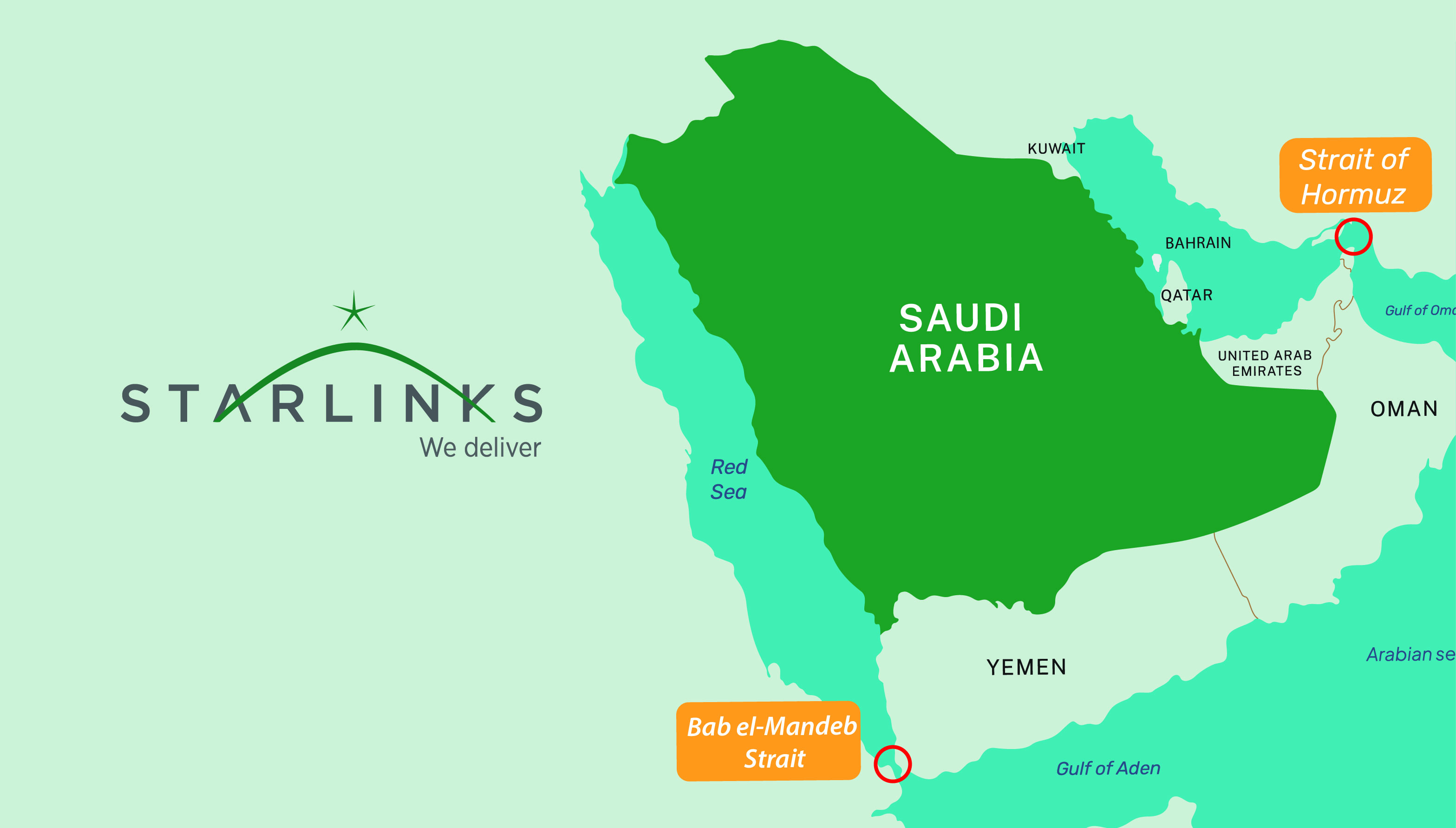
When vessels arrive at destination ports primarily Jeddah Islamic Port or King Abdulaziz Port in Dammam, the complexity intensifies. Regional disruptions, such as the Bab el-Mandeb Strait restrictions due to Red Sea maritime security concerns since late 2023, have shifted operations between ports, increasing congestion and operational strain.
Once the vessel secures a berth and discharge begins, the race against time starts. The process includes Bayan declaration submission, arrival inspection with detailed condition reporting, and non-starters handling for vehicles with battery drain or mechanical issues. All procedures must be completed within the free storage period, typically one week. Failing to meet this deadline results in substantial port storage charges.
Customs clearance follows, including document verification and duty payment. For vehicles destined for Saudi roads, VCC (Vehicle Clearance Certificate) issuance enables Istimara registration. Finally, stockyard transfer coordination moves vehicles from port to storage facilities.
Each step involves different authorities, documentation requirements, and potential delays. Without seamless coordination, vehicles can sit at port for days or weeks.
Once vehicles leave the port, yard operations prepare them for showroom delivery. This stage transforms transport-worn units into customer-ready products.
Secure yard storage protects vehicles from environmental damage and theft. Yard Management Systems (YMS) track every unit's location, status, and dwell time. Pre-Delivery Inspection (PDI) identifies and addresses any transport damage or mechanical issues.
Value-added services bring vehicles to showroom standards: professional detailing, washing and polishing, window tinting, specialized protective coating, and invisible smart repair for minor damage. These services eliminate the need for dealerships to invest in their own preparation facilities.
The goal is simple: every vehicle that leaves the yard is showroom-ready.
The last leg of the journey delivers vehicles from storage yards to dealership showrooms across Saudi Arabia and the GCC region.
This stage requires dedicated car carriers suited to different vehicle types, enclosed carriers for luxury vehicles, open carriers for standard units, and single vehicle transport for high value or specialty cars. White glove transport services protect premium and electric vehicles throughout delivery.
Real-time GPS tracking provides delivery visibility, while confirmation protocols ensure proper handover documentation. For distributors serving multiple dealerships, end-to-end regional transport capabilities enable efficient multi-drop deliveries.
The final mile is where customer expectations meet reality. Delays or damage at this stage directly impact dealership operations and customer satisfaction.
Why Multiple Handovers Hurt Your Bottom Line
The traditional car logistics model relies on separate vendors for each stage: one company for ocean shipping, another for port handling, another for yard storage, another for PDI, and yet another for final delivery.
Each handover introduces risk. Delays accumulate as vehicles wait for the next provider. Documentation gaps create confusion about vehicle condition and responsibility. Damage that occurs between handovers becomes impossible to attribute, and impossible to claim.
1. Waiting time between vendors extends the total journey by days or weeks.
2. Duplicate inspections waste time and resources as each provider re-checks vehicle condition.
3. Inconsistent communication leaves dealerships guessing about arrival dates.
4. No single point of accountability means problems get passed around rather than solved.
5. Increased vehicle dwell time ties up capital in idle inventory.
For electric vehicles, fragmented logistics create additional risks. Extended storage without proper battery management leads to degradation. Lack of specialized handling protocols increases the chance of damage to sensitive components.
The impact on dealerships is direct: delayed sales, frustrated customers, and holding costs that erode margins. In a competitive market, these inefficiencies are unsustainable.
How End-to-End Automotive Logistics Changes Everything
When one provider manages the entire journey from origin port to showroom floor, everything changes.
Dedicated RoRo corridors connect major international ports to Saudi Arabia's primary entry points. Established customs and clearance protocols reduce processing time and minimize delays. Smart scheduling based on vessel forecasts ensures yard capacity aligns with incoming volume. Cross-border expertise enables seamless movement across GCC markets.
The result: reduced turnaround times and predictable delivery schedules.
Centralized yard operations bring storage, inspection, and preparation under one roof. YMS visibility tracks every vehicle in real time. PDI, detailing, repairs, and value-added services happen in sequence, no waiting for separate vendors, no transport between facilities.
Results: faster vehicle turnaround and consistent showroom ready quality.
Dedicated car carriers of all sizes from single vehicle transporters to multi-car haulers handle every delivery requirement. FTL (Full Truckload), LTL (Less than Truckload), cross-border, and last mile capabilities cover the full spectrum. IoT enabled fleet management with GPS, RFID, and sensor tracking provides complete visibility. White glove service protects luxury and high value electric vehicles.
The result: flexible, reliable delivery that meets dealership schedules.
Fewer handovers mean less damage. Single accountability means faster problem resolution. End-to-end visibility means better planning. Reduced dwell time means faster time to market, and faster revenue recognition.
The Right Part, Right Place, Right Time
Finished vehicle logistics gets cars to showrooms. But after sales service keeps customers coming back, and spare parts logistics makes after sales possible.
When a service center needs a part, delays aren't just inconvenient. They mean a customer's vehicle sits idle; appointments get rescheduled, and satisfaction drops. Spare Parts Logistics (SPL) ensures service centers never wait.
A complete SPL solution includes sea and air freight capabilities with global shipping partners, cross-border GCC coverage for regional distribution, and substantial warehousing infrastructure. ISO-certified storage and WMS (Warehouse Management System) integration enable real-time SKU tracking and inventory accuracy.
Operational capabilities matter equally: kitting and bundling for service packages, serialization accuracy for warranty tracking, and same day or next day delivery to meet urgent service needs. FTL and LTL options provide flexibility, while authorized dangerous goods (DG) transport handles batteries and hazardous materials safely.
Streamlined returns processing, recycling programs, and warranty handling complete the ecosystem.
One partner for vehicles AND parts delivers complete automotive logistics, from showroom to service bay.
The Automotive Logistics Partner Built for Scale
Starlinks combines national infrastructure with integrated technology to deliver complete automotive logistics across Saudi Arabia and GCC region.
Our FVL solution covers the entire journey. Global freight and RoRo shipping partnerships connect Saudi Arabia and GCC region to manufacturing hubs worldwide. Cross-border GCC coverage enables regional distribution. Customs clearance expertise and vehicle inspection services streamline port processing.
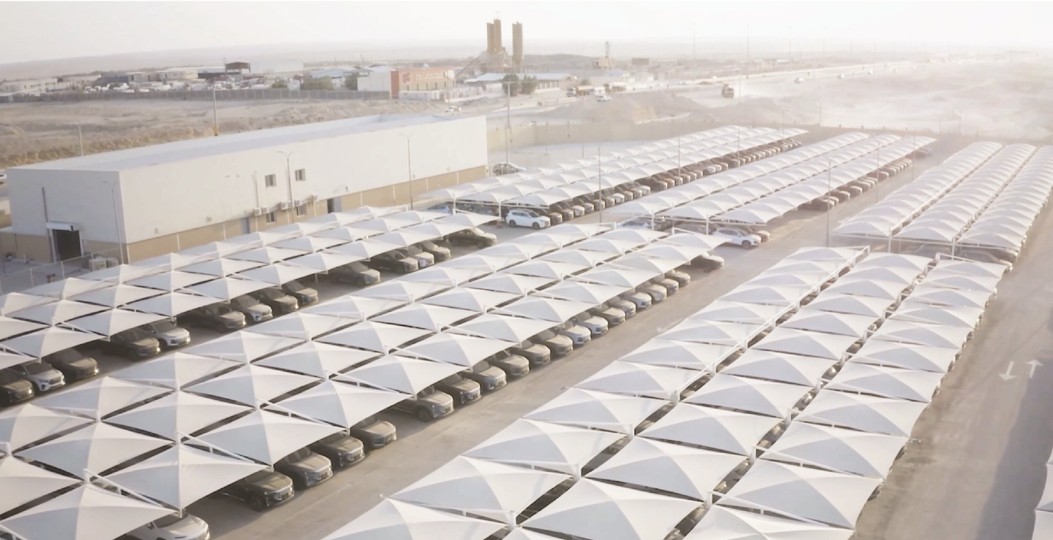
With 950,000 SQM of total yard space, Starlinks provides a kingdom wide vehicle storage capacity. Dedicated car carriers of all sizes, from economy transporters to enclosed luxury haulers, deliver vehicles anywhere in Saudi Arabia. Comprehensive yard services including PDI, detailing, protective coating, and smart repair ensure every vehicle arrives showroom-ready.
Our SPL infrastructure supports car after sales nationwide. 30,000 SQM of ISO-certified spare parts warehousing provides secure, organized storage. WMS integration enables real-time inventory visibility and order accuracy. Same day and next day final mile delivery keeps service centers stocked. Authorized DG transport handles batteries and hazardous materials compliantly.
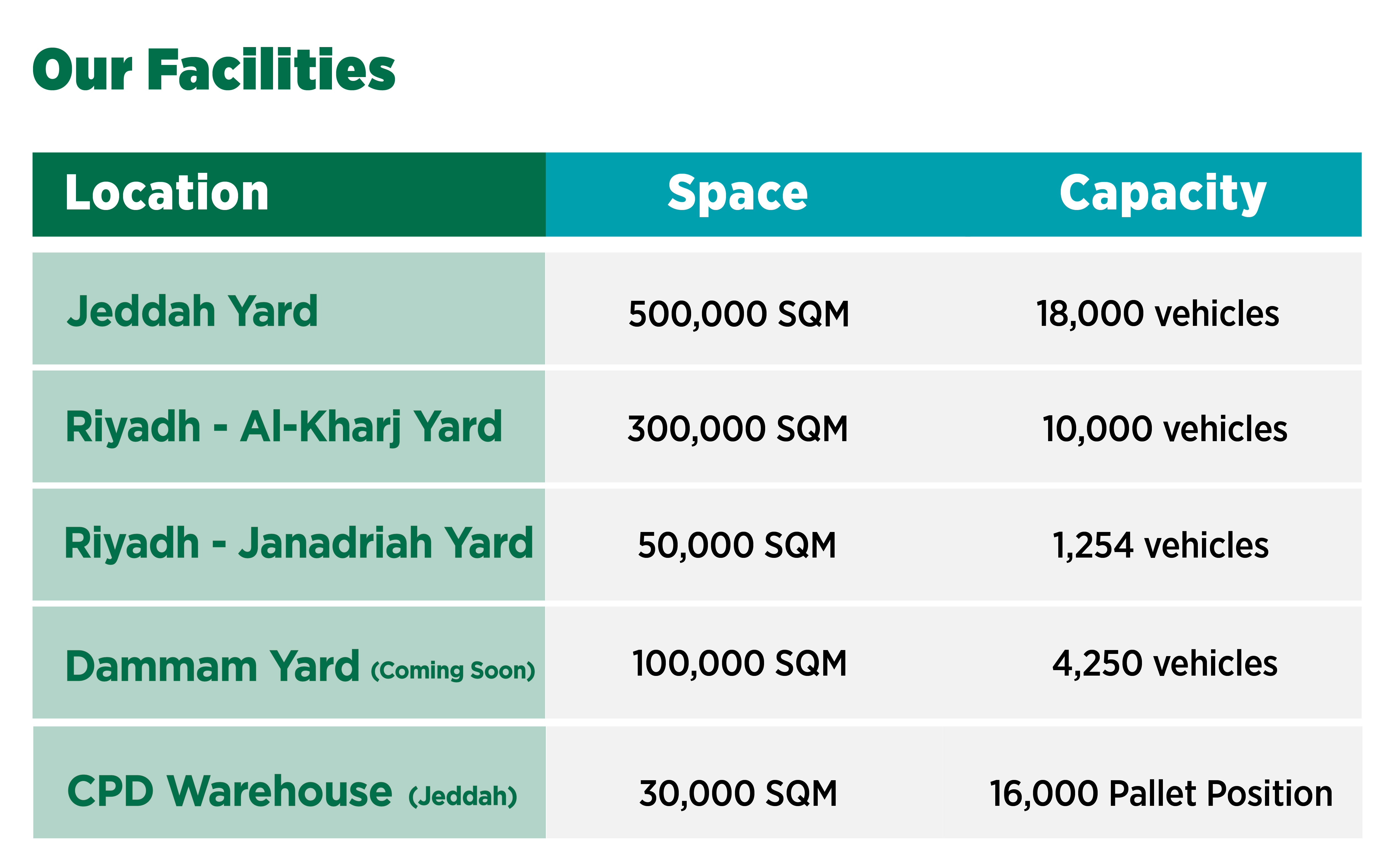
Our technology stack provides control and transparency at every stage.
YMS (Yard Management System) delivers real-time vehicle tracking, damage and claims management, paperless checklists for FVL operations, and dwell time monitoring to optimize inventory flow.
TMS (Transportation Management System) enables truck and route optimization, live GPS tracking, efficiency reporting, and SLA adherence monitoring.
Starlinks LaunchPad (Customer Portal) provides clients with real-time operational visibility, SLA performance dashboards, and a seamless onboarding support.
Performance Benchmarks: Dock-to-stock performance exceeds 95% on time. Order dispatch completes within 24 hours.
In summary, automotive logistics is more than moving vehicles from point A to point B. It's protecting your investment at every stage, from factory floor to showroom. It's ensuring that every vehicle arrives on time, in perfect condition, ready to sell.
Fragmented providers create gaps. Gaps create delays, damage, and cost. Integrated partners close those gaps.
From RoRo to showroom, from spare parts to service centers, one partner, zero gaps.
Ready to streamline your car logistics in Saudi Arabia and GCC region?
Whether you're importing traditional vehicles or scaling EV operations, Starlinks delivers port-to-showroom excellence.