Blogs
November 5, 2026
4
Mins Read
 The News RoomBlogsFour Industries, One Platform: Starlinks Brings Its Logistics Model to the UAE
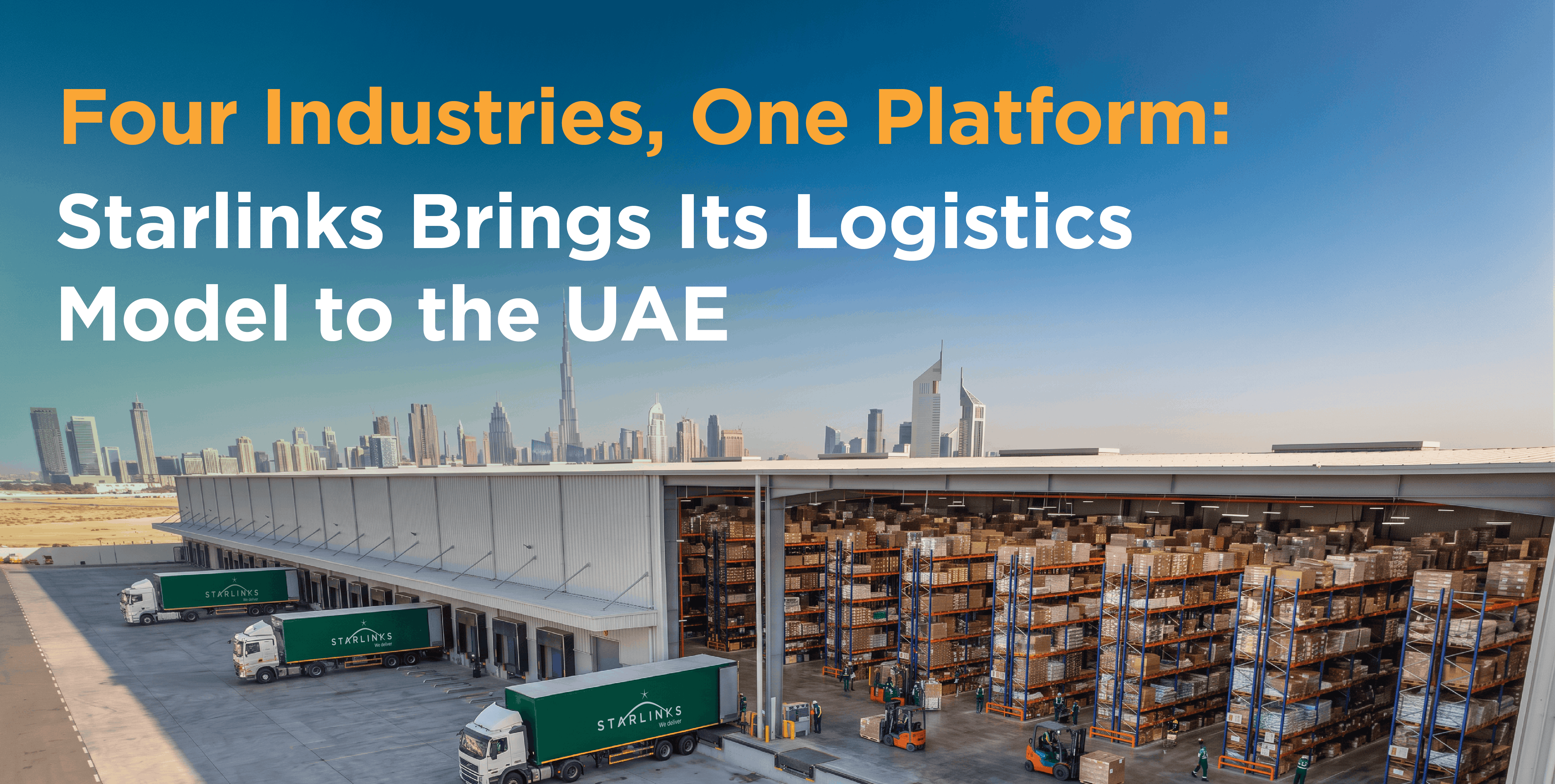
The UAE does not need another warehouse it has plenty. What brands here tell us they're short of is a logistics company in the UAE that already understands their category before the first pallet arrives.
That is the gap Starlinks is setting out to close. We have spent the last six years in Saudi Arabia building a supply chain business around specific industries rather than generic space, and we are now bringing that model to the UAE.
In KSA, we did not grow by adding capacity and waiting for customers to fill it. We grew by working inside four industries until we understood how each one actually moves: Lifestyle, CPG, Quick Commerce and Automotive.
Those four are not interchangeable. A beauty brand needs temperature-controlled, bonded storage and the ability to gift-wrap, kit and label at speed. A CPG manufacturer needs dry storage at scale and a distribution network that keeps shelves full across a whole country. A quick commerce operator needs stock close to the customer and a last-mile operation that can run on a same-day promise. An automotive business needs parts handled with the care of a dealership, from storage to delivery to the workshop door.
Each of those demands a different warehouse layout, a different fleet profile, different systems and different people. We have built all four in Saudi Arabia, often alongside some of the region's best-known brands, and often at a pace that forced us to learn fast.
From day one in the UAE, we are offering the same four verticals with the same operating model behind them.
Bonded entry via our existing KSA bonded zones, plus non-bonded storage across UAE free zone and mainland, temperature-controlled where the product needs it, with pick, pack and value-added services built in.
Cross-border and domestic freight, including the Saudi corridor, under one operating team; not handed off between brokers at the border.
Store deliveries, home deliveries, reverse logistics, and same-day delivery in Dubai, where quick commerce customers now expect it as standard. All at the service levels each industry demands.
Network design, warehouse design and operational transformation for brands that want to rethink how they move product, not just where they store it. The advantage is not that any one of these is new. It is that they already work together, because they have had to in Saudi Arabia.
Saudi Arabia is one of the most demanding logistics markets in the region: long distances, fast-growing e-commerce, strict compliance, and customers whose expectations have risen every year. Building a business there taught us how to scale without losing control, how to run multi-temperature operations reliably, and how to say no to a solution that looks good in a proposal and fails on the floor.
It also means a brand operating in both markets can now work with one logistics partner on both sides of the border, with one set of standards, one point of accountability and one view of their stock, instead of reconciling two different providers' systems every time a shipment crosses the corridor.
Dubai's own trade numbers make the case for us: Jebel Ali Port handled 15.5 million TEUs in 2024, its highest cargo volume since 2015, according to DP World. That is a market moving, not standing still, and one more reason a logistics partner needs to already understand the category, not learn it on the job.
Our UAE operations are live across Dubai, and we are mapping the market industry by industry rather than announcing everything at once. Over the coming weeks we will share more on each vertical: what we offer, who it is built for, and what we have learned in KSA that applies here.
If you run a brand in the UAE in any of these four industries, we would like to hear what you move and where it gets stuck. That conversation is where every solution we have ever built has started.