Blogs
August 11, 2026
8
Mins Read
 The News RoomBlogsHow Strait of Hormuz and Bab al-Mandeb Disruptions Affect RoRo Automotive Logistics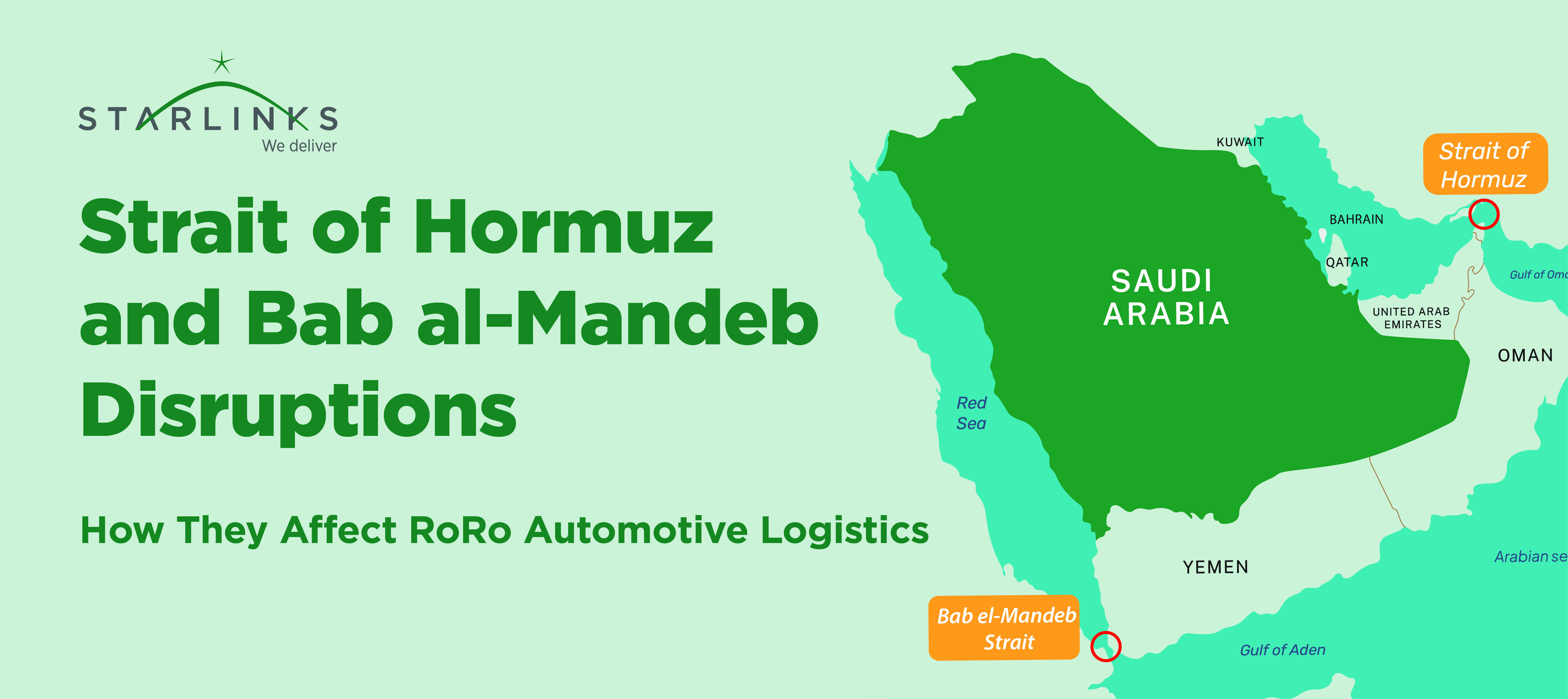
RoRo shipping plays a central role in vehicle import logistics across Saudi Arabia and the wider region. But when major maritime routes come under pressure, the impact goes far beyond the vessel journey itself. It affects discharge planning, delivery lead times, and how smoothly vehicles continue moving into their final markets.
That is the challenge the market is facing now. The Strait of Hormuz and Bab al-Mandeb are both experiencing disruption due to regional conflict, but the conditions are not the same in each corridor. As a result, RoRo shipping lines are responding in different ways, creating added complexity for importers, dealers, and automotive logistics providers.
In this environment, maintaining continuity depends on more than vessel availability alone. It requires routing flexibility, alternative gateway planning, and strong inland execution to keep vehicle imports moving into Saudi Arabia and the wider region.
The Strait of Hormuz and Bab al-Mandeb are two of the most important shipping routes for vehicle imports into Saudi Arabia and the wider region. With both now facing disruption, the challenge is no longer just getting vessels through. It is keeping vehicle imports moving when routing, discharge patterns, and delivery timelines can no longer be taken for granted.
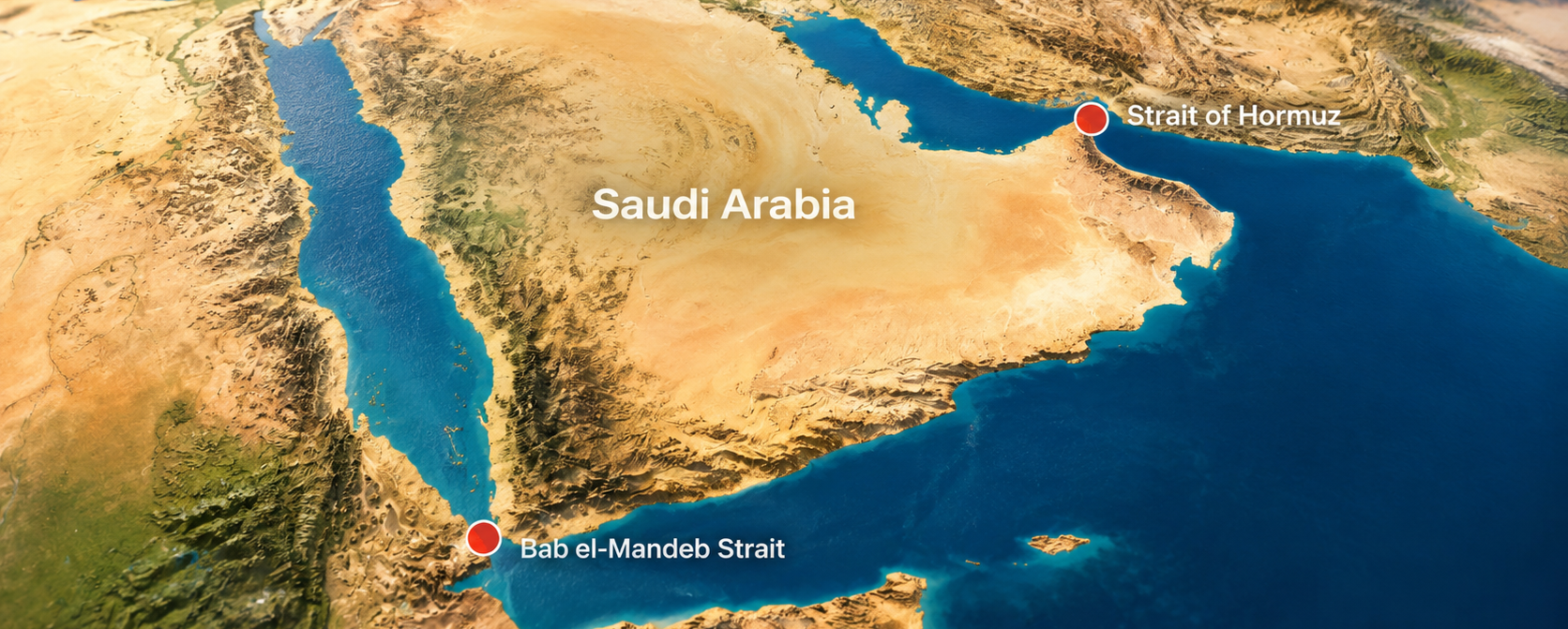
Both the Strait of Hormuz and Bab al-Mandeb are critical to regional maritime connectivity. Hormuz remains one of the world’s most important shipping chokepoints, while Bab al-Mandeb continues to play a major role in Red Sea trade flows despite continued instability. For RoRo shipping, these corridors matter because they influence how reliably carriers can serve Gulf and Red Sea markets, how vehicles enter regional distribution networks, and how stable finished vehicle logistics can remain from port arrival to final delivery.
In automotive logistics, route continuity is not just a shipping issue. It affects vehicle import logistics, inland car transportation, stock availability, dealer planning, and final showroom timing. When either corridor comes under pressure, the effect is felt across the full port-to-showroom chain.
The current operating environment in the Strait of Hormuz remains far more restrictive than normal. Vessel transits through the strait dropped sharply, from an average of 135 in February to fewer than 10 in early March. While movement later recovered from that low point, traffic remained below normal through July and early August, and route planning continued to face disruption. For vehicle importers, that means a corridor that is still operating under pressure, with far less predictability than usual for vessel movement and port access.
For RoRo automotive logistics, that kind of restriction creates more than delay. It creates uncertainty around discharge planning, route reliability, and total landed cost. Automotive Logistics reported that car carriers caught up in the Hormuz situation were already affecting vehicle imports into the Middle East and forcing some operators to discharge units into nearby ports instead of their original destination pattern.
Bab al-Mandeb is different. It has remained more active than Hormuz, but that does not mean it is operating under normal conditions. In April 2026, transits through Bab al-Mandeb were still running at roughly half their pre-disruption level more than two years after earlier disruption began. More recent traffic in late July and early August showed fresh declines as the wider regional conflict intensified, even though the route was still not constrained in the same way as Hormuz.
For RoRo automotive logistics, this keeps the route commercially usable, but much less predictable than normal. Most shipping lines are still moving through the corridor, yet the added risk continues to affect scheduling, routing confidence, and port-call decisions. In many cases, carriers continue to cross while avoiding direct calls at Saudi ports, choosing alternative regional gateways instead where current security conditions are seen as more manageable.
As disruption continues across both straits, the pressure on RoRo automotive logistics is becoming more visible across the full import chain. The effect is not limited to vessel movement alone. It is also affecting how vehicles are routed, discharged, transported inland, and delivered into the market.
▪️Longer delivery lead times.
▪️Higher shipping and insurance-related costs.
▪️More pressure and congestion on alternative ports.
▪️Greater complexity in inland vehicle movement.
▪️Less predictable delivery planning for importers and dealers.
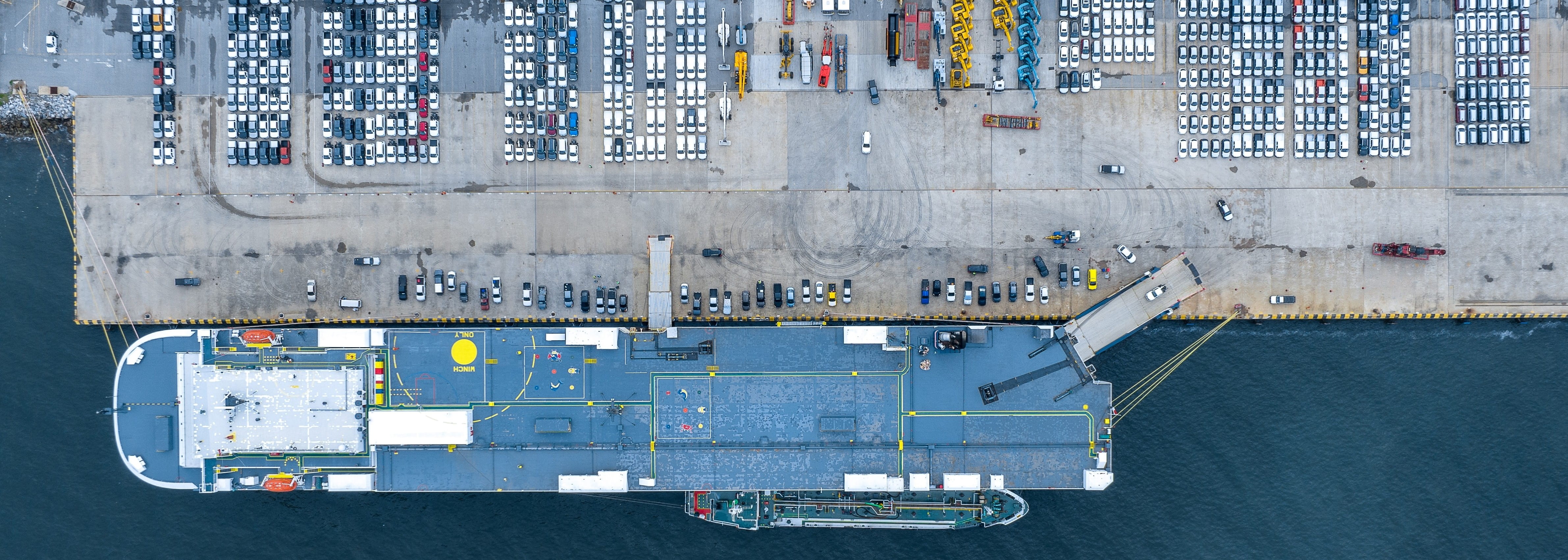
When major maritime routes become less stable, vehicle import logistics becomes harder to plan with confidence. A delayed vessel, a diverted discharge point, or a changed port call can extend timelines well beyond the original shipping plan. At the same time, cost pressure rises through higher freight rates, elevated insurance costs, and the need for more contingency in routing decisions. As vehicles stay longer in alternative ports or wait for onward movement, port-related handling and storage fees can also add to the total landed cost.
The pressure then shifts onto the inland network. As more cargo moves through alternative gateways, port throughput becomes less balanced and vehicle flow becomes harder to manage. Once units land outside their original route, the priority becomes how quickly they can move from port to yard, from yard to dealer, or across borders into the final market. That is where strong regional automotive logistics capability becomes essential, because the challenge is no longer only getting vehicles into the region, but keeping them moving efficiently after discharge.
RoRo shipping lines are not responding in the same way. As disruption continues across both routes, carriers are making different decisions based on route access, operational risk, and service continuity. While some are taking a more cautious approach, others continue to serve the region with changes to routing, discharge points, and port-call patterns.
▪️Avoiding certain routes entirely.
▪️Discharging in alternative regional ports.
▪️Crossing with more selective port calls.
In Hormuz, most shipping lines are still avoiding the crossing entirely. In Bab al-Mandeb, the response is more varied. Some carriers also prefer not to cross and instead discharge shipments through alternative regional ports. Others continue through the corridor, but with more selective discharge and port-call decisions rather than their original direct routing. For vehicle import logistics, the issue is no longer only whether a vessel sails, but where vehicles are discharged and how quickly they can continue into their final market.
Vehicles still need to keep moving even when direct RoRo routes are disrupted. This is where Starlinks adapts, using alternative gateways and connected inland solutions to support vehicle imports into Saudi Arabia and the wider region.
When disruption in the Strait of Hormuz and Bab al-Mandeb makes direct RoRo routing less reliable, Starlinks uses alternative gateway ports to keep vehicle imports moving into Saudi Arabia and the wider region. Depending on carrier routing decisions and final destination requirements, vehicles can be discharged through Sohar in Oman, Fujairah and Khor Fakkan in the UAE, or Aqaba in Jordan.
This gives importers more flexibility in how vehicles enter the region and helps maintain continuity when direct Saudi port calls or original routing plans are disrupted.
When vehicles are discharged in Oman, the UAE, or Jordan instead of their original destination, Starlinks connects those arrivals to overland routes that keep imports moving into Saudi Arabia and the wider region. From these gateway points, vehicles can continue by land into Saudi Arabia, Bahrain, Qatar, Kuwait, and other nearby markets depending on the final delivery plan.
This overland capability becomes especially important when direct RoRo calls are disrupted or delayed. It gives importers a practical way to maintain continuity, reduce additional waiting time at port, and keep vehicles moving toward yards, dealers, and final destinations.
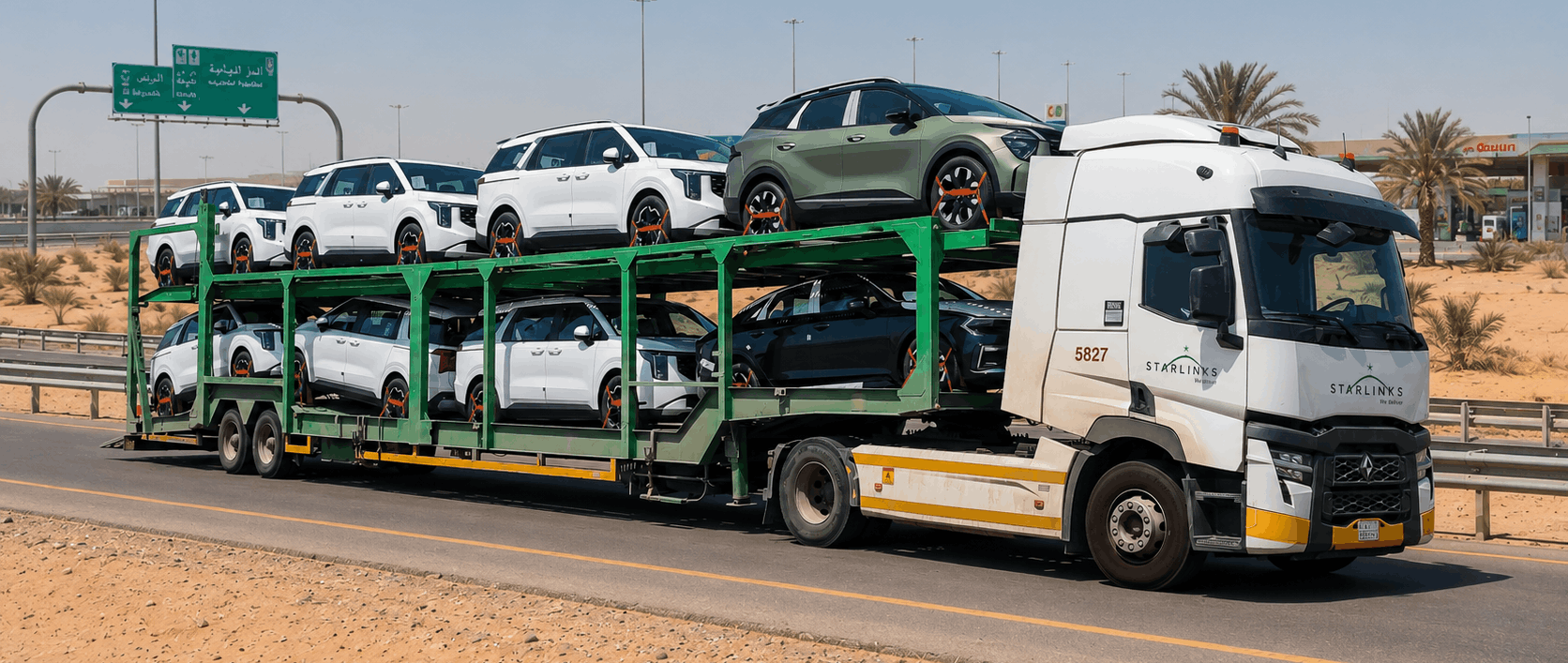
For vehicles discharged in Jordan, Starlinks can support onward movement into Saudi Arabia either by land using car carriers or by feeder vessel, depending on route conditions, timing, and final destination requirements. This gives importers another practical option for keeping vehicles moving when the next leg of the journey works better by sea than by road.
A feeder vessel is a smaller regional vessel used to move cargo between nearby ports and larger shipping hubs as part of a wider maritime network. In the automotive context, this can be a RoRo feeder vessel carrying vehicles directly, or a regular feeder service where vehicles move onward in containers. Depending on the vessel and configuration, feeder services can typically move hundreds to a few thousand vehicles at a time, offering useful flexibility for onward routing and delivery planning
For Starlinks, the priority is clear: keep vehicle imports moving even when regional shipping conditions become more complex. By combining flexible port access, connected inland transportation, and integrated finished vehicle logistics, Starlinks adapts its network to reduce disruption and maintain continuity for importers across Saudi Arabia and the wider region.
Disruption in the Strait of Hormuz and Bab al-Mandeb is reshaping how vehicle imports move into Saudi Arabia and the wider region. For automotive logistics, the challenge is no longer only reaching the port, but maintaining continuity beyond it.
That is where Starlinks adapts. By combining flexible routing, alternative gateways, and connected inland solutions, Starlinks helps keep vehicle imports moving even when direct RoRo routes come under pressure.
To keep your vehicle imports moving through disruption, talk to Starlinks about a more flexible automotive logistics model.