Blogs
June 18, 2026
8
Mins Read
 The News RoomBlogsDark Store Model in Saudi Arabia: The Infrastructure Behind 30-Minute Delivery
.jpg)
Saudi Arabia's delivery landscape is undergoing a fundamental shift. What was once considered a premium feature; receiving a grocery order, a beauty product, or a pharmaceutical prescription in 30 minutes, is rapidly becoming a baseline customer expectation across cities like Riyadh, Jeddah, and Dammam.
Behind this shift sits a piece of infrastructure that most consumers never see but every retailer, brand, and operator is now forced to think about: the dark store.
Dark stores are the engine of Quick Commerce. They're how 30-minute delivery becomes possible at scale. And in Saudi Arabia, the way dark stores are built, financed, and operated is evolving fast, moving away from capital-heavy ownership models toward shared, asset-light infrastructure.
A dark store is a fulfillment hub designed exclusively for online order processing. Unlike traditional retail stores, dark stores are closed to the public. Unlike traditional warehouses, they're hyper-local, positioned within minutes of the customers they serve. Every square meter is engineered around one purpose: picking, packing, and dispatching online orders as fast as possible.
Consumer behavior is shifting fast. Quick Commerce platforms have trained customers to expect 30-minute delivery for everything from groceries to electronics.
Urban density makes hyper-local fulfillment viable. Saudi cities have the population concentration to support neighborhood-level dark stores.
Modern trade and e-commerce are converging. Retailers, brands, and platforms are all competing on speed, not just price or assortment.
Vision 2030 is reshaping retail. Investment in digital commerce, logistics infrastructure, and consumer-facing innovation is at an all-time high.
But here's the problem most operators discover quickly: building dark store infrastructure from scratch is expensive, slow, and operationally complex. Real estate, equipment, technology, fleet, staffing; every layer requires capital and expertise that most businesses don't have on hand.
This is why the dark store model itself is evolving.
Dark stores aren't built for one type of business. The 30-minute delivery model is reshaping five distinct types of operators in Saudi Arabia, each facing different pressures, but all converging on the same need: hyper-local fulfillment infrastructure they don't have to build alone.
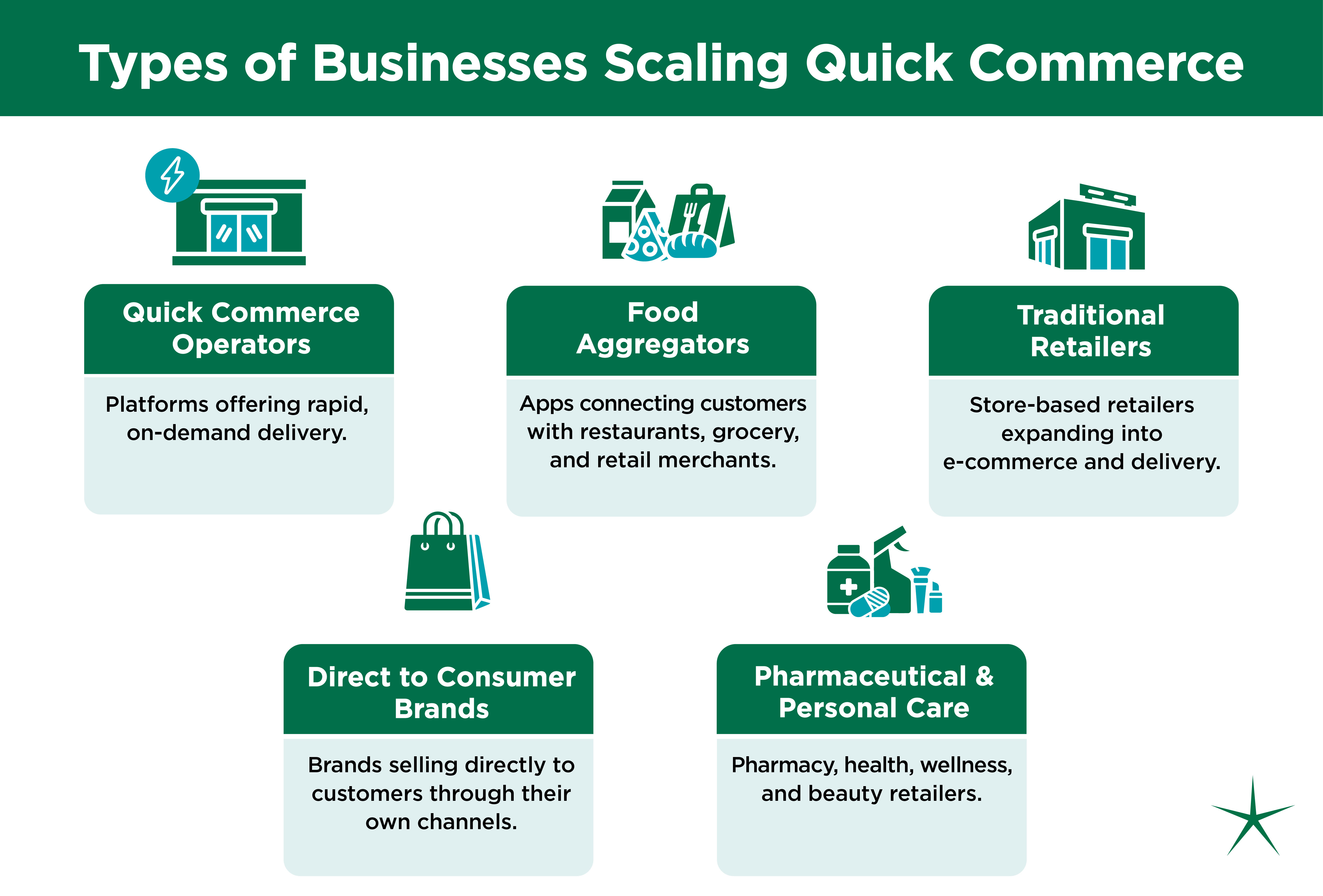
Quick Commerce operators run the platforms consumers use directly, the apps and services promising 15 to 30-minute delivery. Their challenge isn't proving the model. It's scaling it.
Every new city means new real estate, new dark stores, new technology integrations, new teams, and new operational risk. The traditional model demands significant capital deployment before demand is even validated, slowing expansion to a crawl in markets where competitors are moving fast.
Dark store infrastructure changes the equation. Instead of committing 12 to 18 months and millions in CAPEX to enter a new city, operators can launch in 30 days using ready-built infrastructure, validate demand, and scale only where the volume justifies it.
Saudi's food delivery platforms have spent years perfecting last-mile logistics for restaurants. As they expand beyond meals into groceries, pharmacy, beauty, household essentials, and convenience retail, the next phase of growth depends on infrastructure that can scale across new categories quickly.
The challenge is that grocery and retail fulfillment is fundamentally different from restaurant delivery. It requires proper storage, structured picking, inventory management, and dark store operations, capabilities that take time and capital to build from scratch.
Plugging into ready-to-scale dark store infrastructure lets delivery platforms expand capacity, accelerate market growth, and launch new categories faster, without the burden of building operations from the ground up.
Saudi's established retailers have strong brand equity, loyal customers, and physical store networks built over decades. What they don't have is the operational speed of digital-first competitors promising 30-minute delivery.
Converting existing stores into fulfillment hubs is operationally messy, retail floor space wasn't designed for picking. Building dedicated dark stores from scratch is capital-intensive and slow. Both options put retailers in a defensive position while online-first competitors keep accelerating.
Dark store infrastructure offers a third path: neighborhood-level fulfillment hubs that deliver 30-minute capability without converting stores, without massive CAPEX, and without diverting capital from core retail operations.
DTC brands have built direct customer relationships through e-commerce platforms. But most still operate on 3 to 7-day fulfillment windows; a standard the market is rapidly moving past.
Customers buying premium beauty, electronics, or specialty products increasingly expect same-day or 2-hour delivery. For a DTC brand, matching this expectation traditionally meant building owned fulfillment infrastructure, an investment that often doesn't make financial sense at their order volume.
Dark store infrastructure gives DTC brands access to instant delivery capabilities they could never build alone, allowing them to compete on speed without diverting capital from product development, marketing, or customer acquisition.
Pharmaceutical and personal care brands operate in some of the most time-sensitive categories in Quick Commerce. When a customer needs medication, baby formula, or hygiene essentials, delivery delays don't just cost a sale; they cost trust.
These categories also carry strict handling requirements: SFDA compliance, controlled storage, accurate dispensing, and verified delivery. Building dedicated infrastructure to meet both speed and compliance demands at scale is a significant operational and regulatory undertaking.
Dark store infrastructure that's already built for compliance, proper product handling, and rapid fulfillment lets pharmaceutical and personal care brands meet customer expectations without building specialized facilities themselves.
What connects these five business types is the same underlying reality: they all need speed, scale, and operational reliability, but none of them can justify the capital and complexity of building owned dark store networks across multiple cities.
This is where Dark Stores as a Service (DSaaS) is reshaping the economics of Quick Commerce in Saudi Arabia. Instead of treating dark stores as a capital asset, DSaaS treats them as a variable-cost service:
▪️Zero upfront CAPEX, no real estate, equipment, or technology investment.
▪️Pay-for-what-you-use pricing that scales with order volume.
▪️Shared, multi-tenant infrastructure that drives higher utilization.
▪️Rapid deployment, market entry in 30 days, not 12 to 18 months.
▪️Operational ownership, one partner manages warehousing, picking, technology, and last-mile.
The shift is significant. Dark stores stop being a balance sheet liability and become an operational capability; accessible on demand, scalable with growth, and far easier to justify financially.
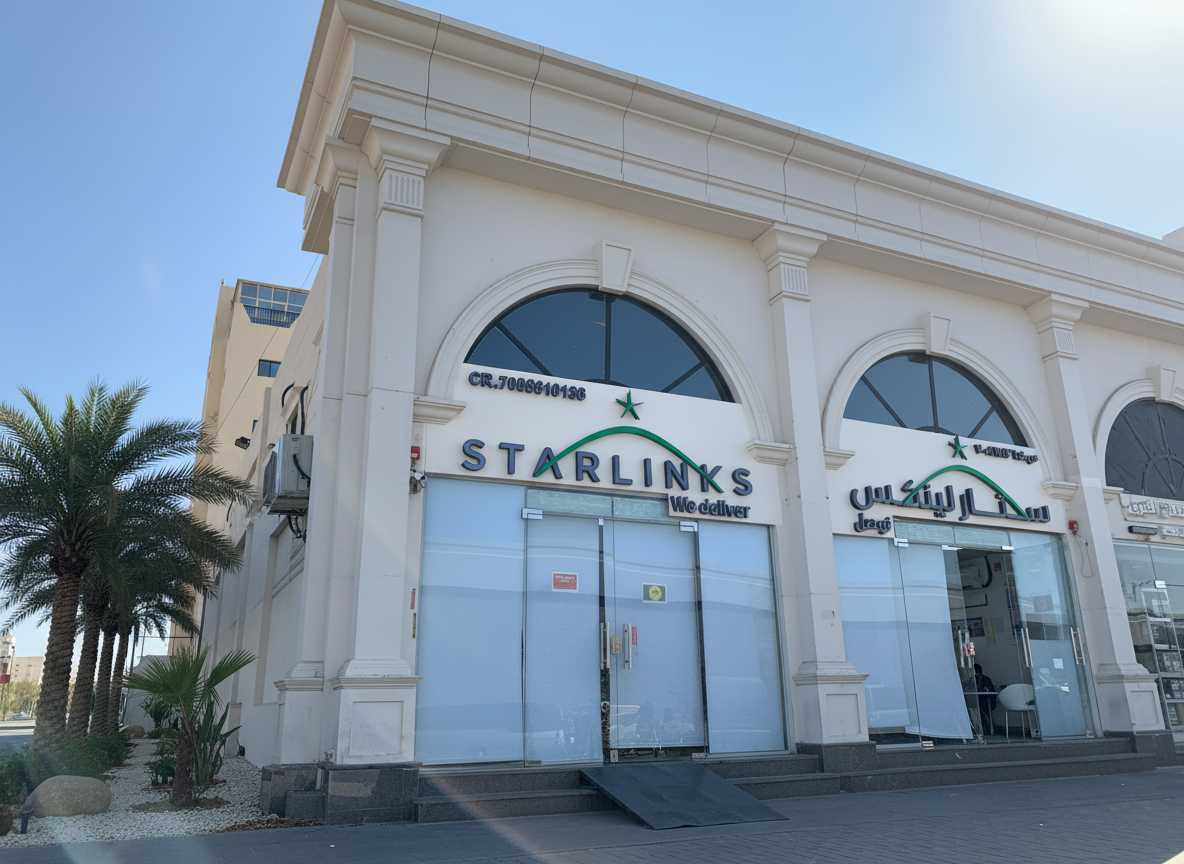
Starlinks operates a Dark Stores as a Service infrastructure across Saudi Arabia, built around the operational realities of all five business types described above.
▪️Shared, multi-tenant infrastructure that drives higher utilization than owned dark stores.
▪️Strategically positioned locations within Saudi cities for true hyper-local fulfillment.
▪️Plug and play deployment with full operational readiness in 30 days.
▪️Integrated technology stack covering WMS, TMS, last-mile dispatch, and real-time visibility.
▪️Variable cost model that flexes with order volume, not fixed overhead.
The result is the same across every business type that depends on Quick Commerce: access to dark store infrastructure built around speed, reliability, and capital efficiency, without having to build any of it.
This is the model behind 30-minute delivery in Saudi Arabia today. And it's the model behind the next generation of Quick Commerce growth across the Kingdom.
Quick Commerce in Saudi Arabia is no longer a niche category. It's becoming the standard way consumers expect to receive everything from snacks to pharmaceuticals. And dark stores are the infrastructure, making it possible.
The businesses winning in this space are the ones moving fastest, deploying smartest, and scaling without being weighed down by infrastructure they don't need to own.