المدونة
June 10, 2026
7
دقائق للقراءة
 التقارير والمقالاتالمدونةAmbient Warehousing for FMCG & Retail: Managing Throughput During Peak Seasons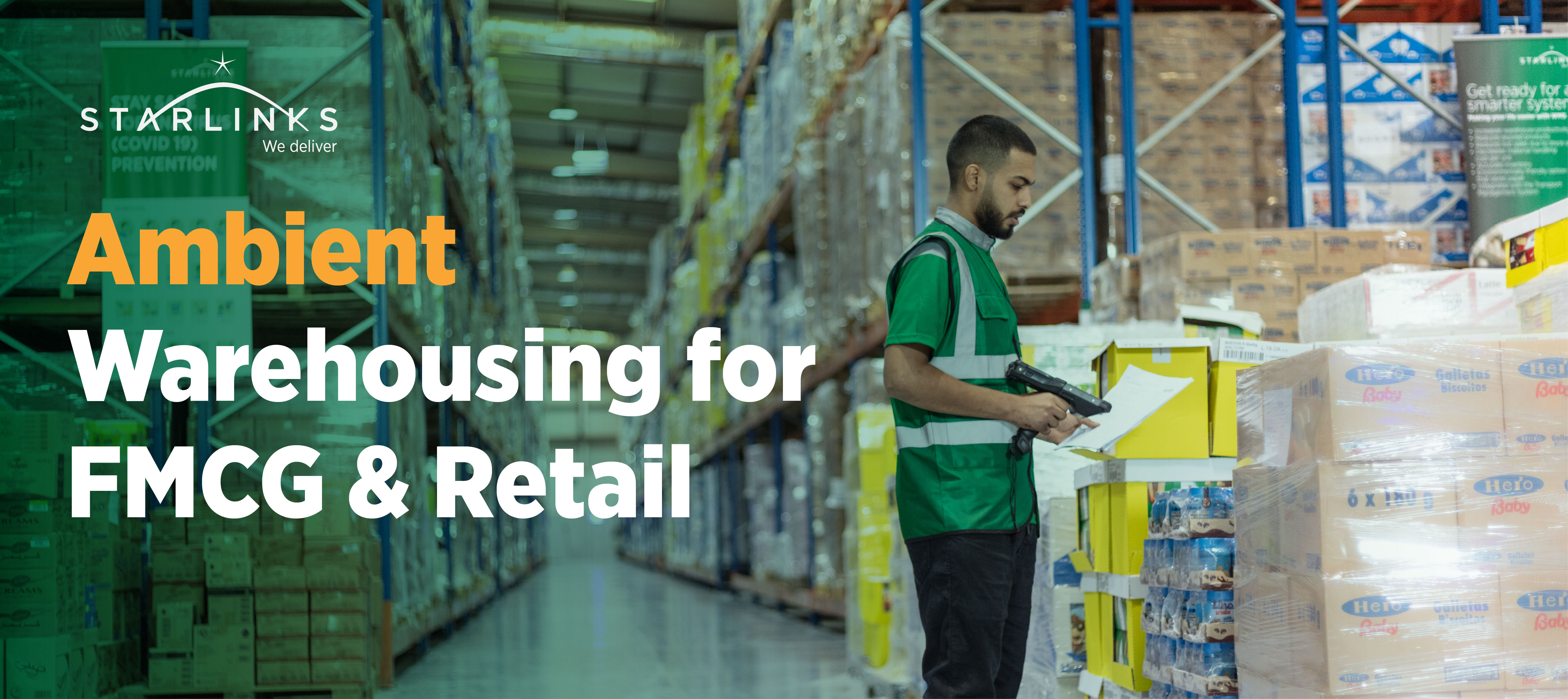
For FMCG and retail brands operating in Saudi Arabia, products don't sit. They move. Inventory turns over fast, demand shifts constantly, and the warehouse sits at the center of every commercial decision, from product launches and promotions to retail expansion and seasonal sell-through.
In this environment, storage is only half the story. The other half is how efficiently products move in and out, and how the warehouse holds up when demand suddenly multiplies.
Two dynamics shape ambient warehousing for FMCG and retail today: throughput, the operational force a warehouse must deliver, and seasonal demand, the external challenge it must absorb. Together, they determine whether a warehouse is an enabler of growth, or a bottleneck holding it back.
This article looks at what throughput and seasonal demand mean for modern ambient warehousing, and what FMCG and retail brands should focus on.
FMCG and retail brands share a common operational reality. High SKU counts, fast inventory turnover, and tight margins leave little room for warehousing decisions that aren't built around movement.
Most FMCG and retail products live in ambient conditions. Shelf-stable foods, beverages, personal care, household goods, packaged retail items, electronics, and packaging materials all fall into this category. While they don't require chilled or frozen storage, they still demand accessibility, organization, and speed.
That's the part most operators underestimate. Ambient warehousing isn't a passive activity; it's an active operational system that touches every part of the brand's commercial performance. These are fast-moving products with rapid replenishment cycles, and the faster they flow inside the warehouse, the faster they reach the shelf. A delayed dispatch becomes a missed retail order. A picking error becomes a returned shipment. A bottleneck during a promotion becomes lost shelf time and lost sales.
For FMCG and retail brands, ambient warehousing isn't just about storing products. It's about keeping them moving at the speed the market demands. That's the principle behind purpose-built ambient hubs like Starlinks' Thuraya, designed for the realities of FMCG and retail movement.
Throughput is the rate at which products move through a warehouse. How fast they're received, put away, picked, packed, and dispatched. In FMCG and retail, throughput is the metric that matters most.
Inventory in these sectors doesn't sit on shelves. It moves. Modern trade retailers expect tight delivery windows. Promotional cycles compress weeks of sales into days. And margins are thin enough that every hour a product spends in the warehouse instead of in the market eats into profitability.
A warehouse built for FMCG and retail throughput operates differently from a basic storage facility:
▪️Fast dock-to-stock receiving that puts inbound products into the picking flow quickly.
▪️Efficient pick paths and order consolidation that cut internal travel time.
▪️Multiple loading bays that keep inbound and outbound flows separate.
▪️24/7 operations that keep dispatch moving around the clock.
▪️Smart layouts that place fast-moving products closer to dispatch zones.
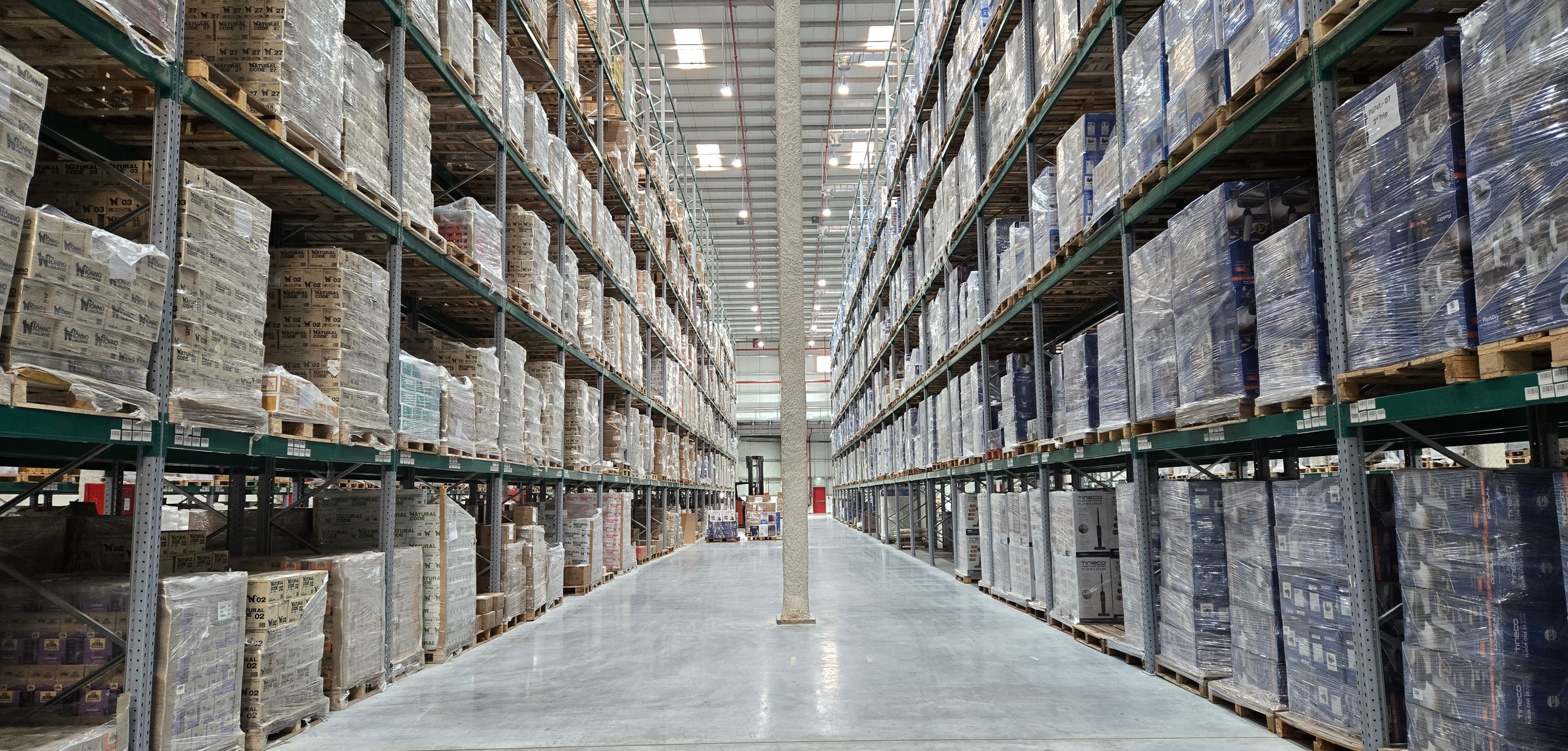
Consider a beverage brand running a national promotion. Same-day or next-day dispatch isn't a nice-to-have. It's the difference between full shelves and empty ones across hundreds of retail locations. A warehouse that takes three days to pick and dispatch isn't slow, it's a brand liability.
The lesson is simple: for FMCG and retail brands, storage capacity is the foundation. But throughput is what determines whether the operation actually delivers.
Throughput matters every day. Demand, however, doesn't behave the same way. In Saudi Arabia, it surges. The surges are large, predictable, and unavoidable. For FMCG and retail brands, these aren't occasional disruptions. They're the busiest periods of the year, when the warehouse has to do more in less time.
▪️Ramadan drives massive surges in packaged foods, beverages, and personal care.
▪️Hajj season pushes demand for packaged foods and consumer essentials.
▪️Summer months spike beverage and household goods volumes.
▪️Back-to-school concentrates retail demand into short, intense windows.
▪️White Friday delivers multi-day retail and promotional surges.
▪️Saudi National Day and holiday promotions add layered spikes throughout the year.
A warehouse that performs well in normal conditions but breaks down during peaks isn't built for FMCG and retail. Demand surges require:
▪️Flexible storage capacity that absorbs pre-season inventory builds.
▪️Scalable throughput that handles multiples of normal daily volume.
▪️Pre-positioned inventory to compress time-to-market during surges.
▪️Operational agility to flex labor, shifts, and dispatch schedules.
An FMCG snack brand preparing for Ramadan typically builds inventory four to six weeks before the season begins. The warehouse must absorb that build, then dispatch three to four times the normal daily volume during the season itself, without sacrificing accuracy or speed. If the warehouse can't handle either side of that cycle, the brand pays the price.
For FMCG and retail brands, the question isn't whether demand will surge. It's whether the warehouse is built to handle it when it does.
Pulling throughput and seasonal demand together, a clear set of standards emerges for what modern ambient warehousing should deliver to FMCG and retail brands:
▪️Substantial pallet capacity for daily operations and pre-season builds.
▪️Parallel loading bays for high-volume inbound and outbound flows.
▪️24/7 operations that keep dispatch moving around the clock.
▪️Strategic location with direct highway access to key demand centers.
▪️Integrated transportation network connecting the warehouse to nationwide distribution.
▪️Real-time visibility into inventory and operations.
▪️Flexible commercial models that scale with seasonal cycles.
▪️Food-grade and regulatory compliance where FMCG categories require it.
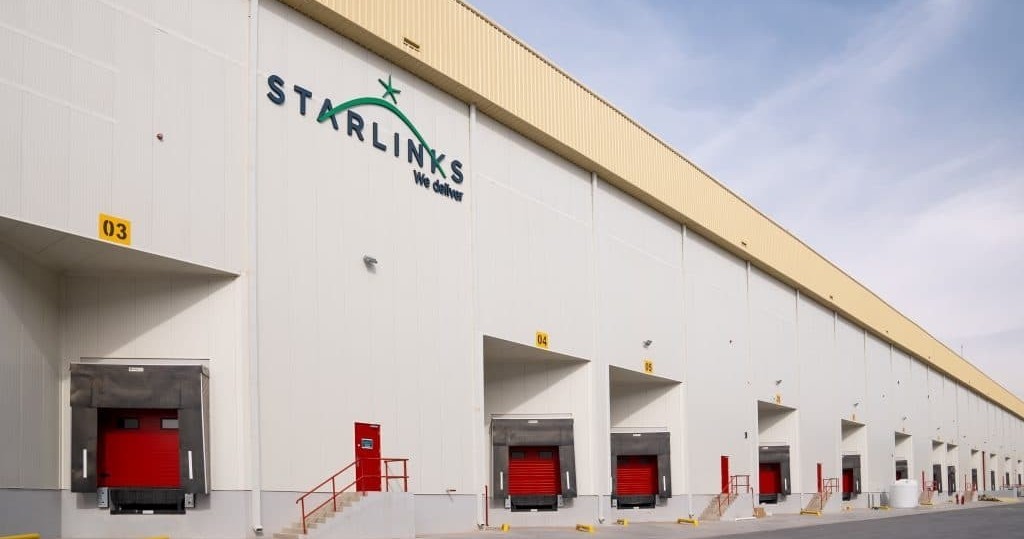
The goal isn't to find the biggest warehouse available. It's to find the right 3PL partner that has a warehouse built around the realities of how FMCG and retail brands actually operate.
These standards aren't abstract. They're built into how Thuraya, Starlinks' ambient logistics hub in Riyadh, was designed and operated.
Thuraya is located in Agility Park, with direct access to Riyadh's major highways and proximity to key consumption zones. Its operational design reflects the realities of FMCG and retail warehousing:
▪️65,000 pallet positions for daily turnover and pre-season builds.
▪️Ambient storage at 18°C to 23°C for shelf-stable FMCG and retail products.
▪️34 loading bays running in parallel for high inbound and outbound throughput.
▪️24/7 operations ensuring dispatch flows around the clock.
▪️Dock Scheduling system that coordinates carrier arrivals and dispatch flow.
▪️Integrated technology stack with WMS, TMS, ensuring real-time visibility.
Thuraya isn't designed as a static storage facility. It's designed as an active operational hub built around movement, flexibility, and the surge handling that FMCG and retail brands face every season.
.jpg)
For brands that handle both ambient and temperature-sensitive products, Thuraya operates alongside Polaris, Starlinks' dedicated cold-chain facility. Together, they form a connected ambient and multi-temperature network under one logistics partner, closing the gap that often forces brands to manage their cold-chain and ambient flows through separate providers.
For FMCG and retail brands in Saudi Arabia, ambient warehousing is not a storage decision. It's an operational one. The brands that win are the ones working with the right logistics partner, one that delivers daily throughput, flexes through seasonal surges, and connects seamlessly to nationwide distribution.
Throughput and seasonal demand will only intensify as the market grows. The warehouse decisions made today shape how prepared a brand will be for the demand of tomorrow.