When disruptions to established shipping routes began affecting automotive imports into Saudi Arabia, United Motors Group (UMG) faced a critical logistics challenge: finding a reliable alternative route while maintaining control over vehicle handling, storage, and transportation.
When disruptions to established shipping routes began affecting automotive imports into Saudi Arabia, United Motors Group (UMG) faced a critical logistics challenge: finding a reliable alternative route while maintaining control over vehicle handling, storage, and transportation.
Working closely with UMG and its operational partners, Starlinks helped establish an alternative logistics solution through Aqaba, Jordan, supporting the movement of vehicles into Saudi Arabia despite challenging port conditions.
As an automotive distributor managing multiple vehicle brands, UMG depends on reliable inbound logistics to maintain its supply chain operations.
Changes in regional shipping conditions required a reassessment of traditional import routes, with shipments increasingly being redirected to alternative ports.
Aqaba emerged as a practical alternative, but the diversion introduced its own operational challenges, including port congestion, storage capacity constraints, and additional cross-border coordination requirements.
The project required more than securing an alternative port. It called for an integrated operational approach capable of managing vehicle arrivals, temporary storage, port handling, customs processes, and onward transportation.
The diversion of automotive shipments placed significant pressure on alternative port infrastructure.
At Aqaba, the increased volume of vehicles created several challenges:
For UMG, the objective was to establish a dependable logistics flow capable of supporting vehicle imports while responding to the realities on the ground.
Starlinks worked alongside UMG and its logistics partners to support an alternative route through Aqaba Port.
The operating model brought together port handling, vehicle storage, documentation coordination, Jordan-side customs clearance, and onward transportation into Saudi Arabia.
A key part of Starlinks' approach was maintaining close operational oversight.
Rather than managing the movement remotely, Starlinks representatives were present on the ground, working directly with the customer and operational partners to assess conditions, monitor progress, and address challenges as they developed.
This approach helped maintain coordination across the different stages of the automotive supply chain, from vessel discharge to the movement of vehicles toward Saudi Arabia.
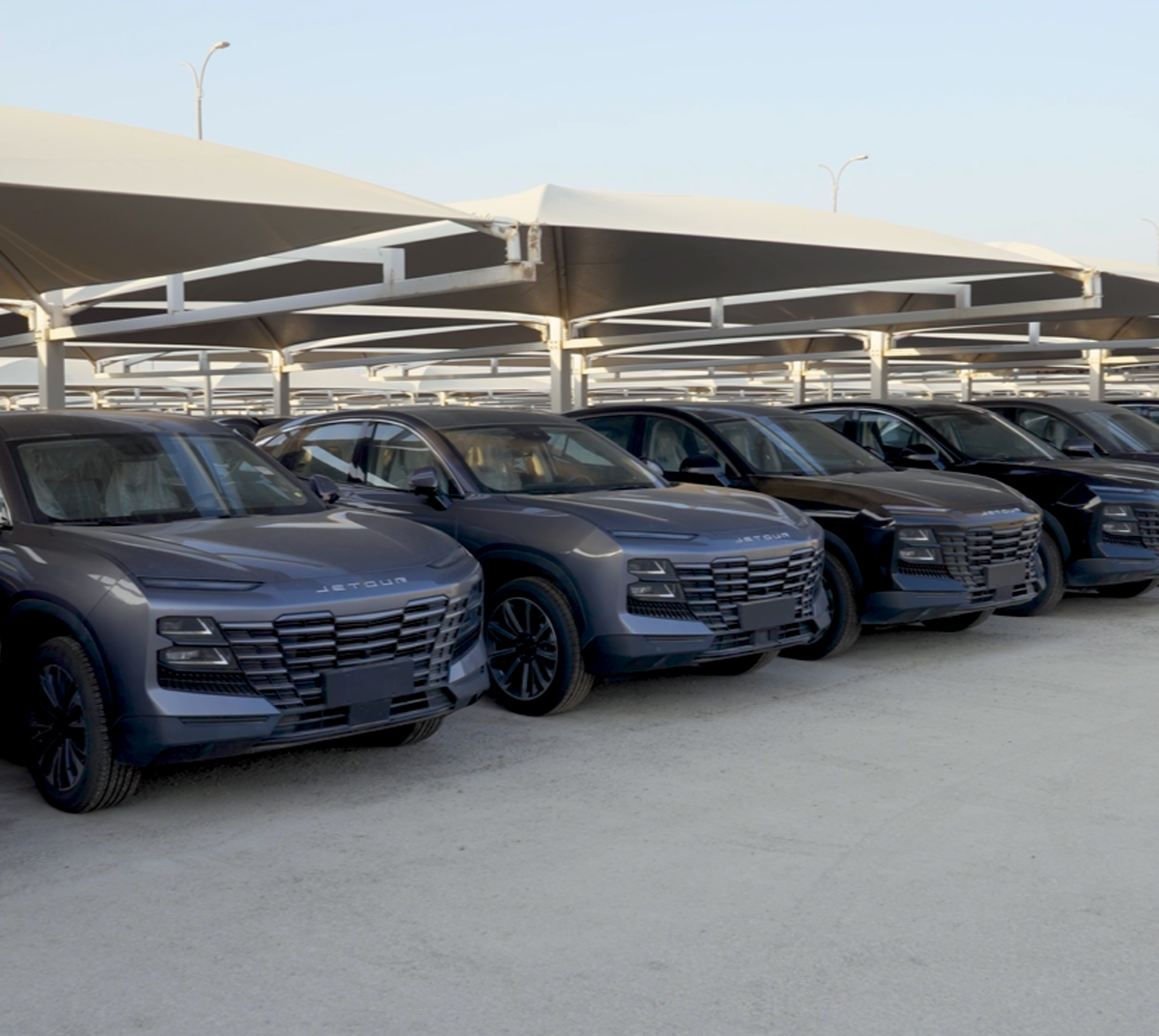
Maintaining automotive supply chain continuity through alternative port operations, secure vehicle storage, and coordinated cross-border logistics between Jordan and Saudi Arabia.
Client: United Motors Group (UMG)
Industry: Automotive
Solution: Integrated Automotive Logistics
Location: Aqaba, Jordan → Saudi Arabia
Services: RoRo & Port Logistics, Vehicle Storage, Customs Coordination, Cross-Border Transportation
When regional shipping disruptions began affecting established automotive import routes, United Motors Group (UMG) faced a complex challenge: maintaining the movement of thousands of vehicles into Saudi Arabia while adapting to increasingly unpredictable maritime logistics conditions.
Traditional import routes were affected by changing shipping schedules and vessel diversions, creating an urgent need to evaluate alternative ports and establish a dependable logistics operation.
For UMG, the challenge extended beyond identifying another port of entry. The company needed a logistics partner capable of coordinating vehicle discharge, securing appropriate storage facilities, managing documentation and handling requirements, and organizing the movement of vehicles across international borders.
With an established working relationship and experience in integrated automotive logistics, Starlinks worked alongside UMG to develop and support an alternative operating model through Aqaba Port in Jordan.
The operation covered multiple stages of the automotive supply chain, from port arrival and vehicle storage to transportation coordination and onward movement into Saudi Arabia.
With approximately 7,000 vehicles within the wider project scope, the operation highlighted the importance of combining alternative route planning, local operational expertise, and close customer collaboration.
More importantly, it demonstrated how an adaptable logistics approach can help automotive businesses respond to disruption without losing sight of their core supply chain objectives.
Automotive supply chains rely on the coordinated movement of finished vehicles across multiple stages, including international shipping, port handling, customs procedures, vehicle storage, inland transportation, and final distribution.
Any disruption within this network can affect the stages that follow.
For automotive importers and distributors, maritime disruption can create additional challenges due to the size and volume of vehicle shipments, the handling requirements of finished vehicles, and the operational complexity of moving large quantities through alternative gateways.
When established maritime routes become less predictable, identifying an alternative port is only the beginning.
The new route must also offer suitable infrastructure, sufficient vehicle storage capacity, reliable transportation connections, and access to experienced operational partners.
In UMG's case, shipping diversions increased the importance of alternative gateway planning and the ability to manage vehicle movements through unfamiliar or heavily congested infrastructure.
The objective was not simply to redirect shipments, but to establish an operating model capable of maintaining supply chain continuity under challenging conditions.
As regional maritime conditions changed, UMG needed an alternative gateway capable of supporting inbound vehicle shipments destined for Saudi Arabia.
Several potential routes required evaluation, taking into account port accessibility, operational feasibility, transportation connections, cost considerations, and the ability to handle automotive cargo.
Aqaba, Jordan, was identified as a practical alternative for supporting vehicle imports into Saudi Arabia.
However, the availability of a port did not automatically guarantee a smooth logistics operation.
The diversion of shipments to alternative regional ports placed additional pressure on infrastructure.
At Aqaba, increased automotive cargo volumes created challenges across port handling, storage availability, and vehicle collection.
Congestion at port exit points also affected the movement of vehicles out of the terminal, creating an additional layer of operational uncertainty.
These conditions required continuous coordination and the flexibility to adjust vehicle movements based on the situation on the ground.
Finished vehicles require appropriate handling and storage arrangements to protect their condition and maintain inventory control throughout the logistics process.
For UMG, securing sufficient and suitable storage capacity was particularly important given the volume of vehicles involved.
The solution needed to accommodate arrivals, manage temporary storage, and support the organized release of vehicles for onward transportation.
Without an effective storage and release process, congestion could extend beyond the port and affect the entire downstream logistics operation.
Moving vehicles from Aqaba into Saudi Arabia introduced additional operational stages.
The process required coordination between port operators, vehicle storage providers, documentation teams, customs stakeholders, transport providers, and the receiving operations in Saudi Arabia.
Each stage depended on timely information and alignment between different parties.
Maintaining a clear division of responsibilities was therefore essential to supporting a reliable cross-border flow.
The alternative route involved multiple organizations, locations, and operational handovers.
UMG needed a logistics partner capable of coordinating the different elements of the operation while maintaining clear communication and responding to changing circumstances.
This required more than a transportation provider. It required an experienced automotive logistics partner with the ability to remain involved throughout the operational journey.
Starlinks worked with UMG and its operational partners to support an integrated logistics solution connecting Aqaba Port with receiving locations in Saudi Arabia.
The approach combined route planning, port-side coordination, storage arrangements, documentation support, and transportation management within a connected operational process.
Before proceeding with the Aqaba solution, alternative gateways were considered, including Fujairah, Khor Fakkan, and ports in Oman.
Each option presented different operational and commercial considerations.
Aqaba was selected as a practical route for the requirements of the project, offering an alternative entry point and a connection to Saudi Arabia through the Jordan–Saudi land border.
The selected route provided a framework through which Starlinks and its partners could organize the necessary operational stages and coordinate the movement of vehicles.
The operation began with the arrival and discharge of RoRo vessels at Aqaba Port.
Starlinks worked with its local partners to coordinate the required handling activities and support the movement of vehicles through the port process.
This involved maintaining close communication around vessel arrivals, cargo discharge, vehicle availability, and readiness for onward movement.
As port conditions evolved, continuous coordination helped the teams respond to changes affecting vehicle collection and release.
An important component of the solution was securing suitable storage arrangements for the vehicles arriving through Aqaba.
Starlinks and its partners coordinated storage capacity to accommodate vehicles awaiting further processing and transportation.
The operating approach included supporting the safe handling, organization, and controlled release of vehicles from storage.
Where required, the ASEZA Free Zone yard formed part of the wider vehicle handling and storage arrangements.
The objective was to establish a structured flow between vessel discharge, temporary storage, and onward transportation, rather than allowing vehicles to accumulate without a coordinated release process.
International vehicle movements require alignment between operational and documentation processes.
For the Aqaba route, Starlinks and its partners supported the coordination of documentation and Jordan-side customs clearance activities associated with vehicle movements.
Saudi Arabian customs clearance remained under UMG's responsibility.
This division of responsibilities allowed each party to manage its respective scope while maintaining coordination across the overall operation.
Following the completion of the required port, storage, and Jordan-side clearance processes, vehicles were prepared for onward transportation.
The planned flow connected Aqaba with the Jordan–Saudi border and continued toward Starlinks' automotive receiving and storage facilities in Saudi Arabia, including the Al Jumum area where applicable.
Starlinks coordinated with transportation partners to support the movement of vehicles along this route.
The operation required alignment between vehicle readiness, available transport capacity, documentation, border procedures, and destination requirements.
By managing these interconnected activities, Starlinks supported a coordinated vehicle movement process across the two countries.
The solution can be summarized through six interconnected stages:
Stage 1 — RoRo Vessel Arrival
Vehicle shipments arrive at Aqaba Port, with discharge and port operations coordinated through the relevant operating partners.
Stage 2 — Port Handling and Vehicle Collection
Vehicles move through the applicable port handling and release procedures, taking into account terminal capacity and operational conditions.
Stage 3 — Vehicle Storage and Yard Operations
Vehicles are transferred to designated storage locations where required, with appropriate handling and controlled release arrangements.
Stage 4 — Documentation and Jordan-Side Clearance
Required documentation and customs procedures are coordinated to prepare vehicles for cross-border movement.
Stage 5 — Cross-Border Transportation
Vehicles are transported toward the Jordan–Saudi border, with Starlinks coordinating the relevant transportation and operational handovers.
Stage 6 — Arrival and Receiving Operations in Saudi Arabia
Following Saudi customs clearance arranged by UMG, vehicles proceed toward the designated receiving locations for the next stage of the automotive supply chain.
Together, these stages formed a connected operating model designed to maintain coordination and respond to changing conditions across the vehicle movement process.
One of the defining aspects of the project was the importance of direct operational involvement.
While route planning and logistics coordination establish the framework, real-world execution often requires immediate responses to circumstances that cannot always be anticipated.
During the Aqaba operation, Starlinks representatives were present on the ground alongside UMG and its partners.
This presence allowed the teams to assess actual operating conditions, inspect handling and storage arrangements, review vehicle movements, and discuss challenges directly with the stakeholders involved.
For Starlinks, maintaining close operational oversight was particularly important given the congestion at Aqaba and the complexity of coordinating multiple vehicle brands and shipments.
Hazim Bisharat, Starlinks Customer Success Manager, explained the approach during the joint operational visit:
"It's about managing the automotive supply chain and the full operations, and staying close to every critical point for operations and the process itself."
Hazim Bisharat
Customer Success Manager, Starlinks
This hands-on approach helped connect planning with operational execution.
Rather than relying exclusively on remote updates, the team could observe challenges firsthand and work with its partners to identify practical ways forward.
The objective was to remain closely aligned with the customer while maintaining coordination across the different stages of the logistics process.
The Aqaba project demonstrated several important operational outcomes and capabilities.
Starlinks supported UMG in establishing an alternative logistics flow through Aqaba, providing a practical route for automotive shipments affected by changes to established maritime operations.
Despite the challenging operating conditions, Starlinks and its partners secured vehicle storage arrangements and supported the organized handling and release of vehicles.
This was an important part of maintaining control over the movement of incoming shipments.
The wider project involved approximately 7,000 vehicles, requiring coordinated planning across port handling, storage, documentation, and cross-border transportation.
The operation demonstrated the scale and complexity of automotive logistics when significant vehicle volumes must move through an alternative gateway.
With teams from Starlinks, UMG, and the relevant logistics partners working together, the operation benefited from direct communication, on-site assessments, and a shared understanding of the challenges affecting vehicle movements.
Congestion and delays at Aqaba's exit gates remained real operational challenges.
Nevertheless, the teams continued coordinating storage and vehicle pullouts, adapting their approach to the conditions encountered.
These outcomes reflect the operational progress described during the joint site visit, rather than claiming that all planned vehicles were delivered or that congestion-related delays were eliminated.
For UMG, the Aqaba project reinforced the value of working with an established logistics partner capable of responding to complex and changing conditions.
During the on-site visit, Bilal Drouby, Group Commercial Director at UMG, highlighted the operational pressure facing the port and the importance of dependable partners.
The increased volume of diverted shipments had created congestion and vehicle handling challenges, making it essential to secure sufficient storage and maintain vehicle movement.
Despite these constraints, UMG recognized Starlinks' contribution to the operation.
"We are relying on a very capable third party being Starlinks. We've been dealing with them for a long time now."
Bilal Drouby
Group Commercial Director, UMG
Bilal also acknowledged the team's efforts in securing storage space, handling vehicles safely, and supporting the pullout of significant vehicle volumes within the limitations of the port environment.
His assessment reflected both the progress achieved and the challenges that still needed to be managed, particularly around port congestion.
This balance is important.
Successful automotive logistics is not always about operating without obstacles. It is also about having the experience, relationships, and operational capabilities to respond when circumstances change.
Selecting an alternative port is only one part of maintaining automotive supply chain continuity.
The wider operating model must account for storage requirements, inland transportation, documentation, customs responsibilities, and destination capacity.
The Aqaba project demonstrated why alternative route decisions need to consider the complete vehicle movement process rather than focusing on maritime access alone.
Alternative ports often present unfamiliar operating environments, especially when facing unexpected increases in cargo volumes.
Working with experienced local partners and maintaining direct visibility into operations can support better coordination and more informed responses to changing conditions.
Temporary vehicle storage plays a significant role in managing the flow of large automotive shipments.
When vehicle discharge and onward transportation cannot move at the same pace, suitable storage arrangements help manage the transition between these stages.
Complex logistics operations require continuous communication between customers and service providers.
The joint visit to Aqaba allowed UMG and Starlinks to evaluate conditions directly, align on operational priorities, and maintain a shared understanding of the challenges involved.
Supply chain resilience depends not only on having established processes, but also on the ability to adapt those processes when conditions change.
The Aqaba operation illustrated how alternative routing, operational coordination, and on-the-ground involvement can support businesses navigating unexpected disruption.
The Aqaba project reflects Starlinks' approach to automotive logistics: connecting the different stages of the supply chain through integrated services, operational expertise, and close customer collaboration.
From RoRo and port logistics to vehicle storage, cross-border transportation, and distribution, Starlinks supports automotive businesses in managing complex vehicle movements across Saudi Arabia, the GCC, and beyond.
The UMG project highlighted several capabilities that are particularly important in challenging operating environments:
These capabilities extend beyond individual transport movements or storage services.
They form part of a broader approach to managing automotive supply chains from port arrival through to destination operations.
The Aqaba project was more than an alternative shipping route.
It was an example of how automotive businesses and logistics partners can work together to navigate uncertainty, address operational challenges, and maintain momentum across complex supply chains.
For UMG, the situation required a dependable partner capable of responding to the realities of a changing operating environment.
For Starlinks, it was an opportunity to demonstrate the value of direct involvement, practical problem-solving, and coordinated logistics execution.
As Chadi Alabbassy, Head of Marketing at Starlinks, explained during the visit:
"Automotive logistics doesn't stop at the yard, the warehouse or the border."
Being present where operations happen, working closely with customers, and adapting when circumstances change are essential parts of an effective logistics partnership.
Because keeping automotive supply chains moving requires more than transportation. It requires a partner who understands the entire journey.
Whether you're managing automotive imports, exploring alternative shipping routes, or looking for integrated vehicle storage and transportation solutions, Starlinks can help you navigate the complexities of your automotive supply chain.
Explore Our Automotive Logistics Solutions
Contact Our Team


